
Notes

Written 26 August 2018 in Payne County, Oklahoma.

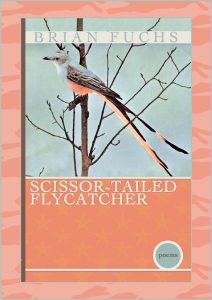
Brian Fuchs, “Luctus Herbarium” from Scissor-tailed Flycatcher (Scissortail Press, 2020)


Campsis radicans

That house still haunts me;
the absences I feel are extreme.
Brad has kept the trumpet vines,
electric and intense like himself.
He pulled the irises that were once
lining the paths and taking breath
away from visitors as they passed.
The enormous black-purple blooms,
now towering only in our memory.
He inherited too much and not enough,
spending time and money adjusting,
spreading out and stamping his energy
onto the places that had been our center.
He’s added alcohol to the room where
my grandma’s last moments began,
highlighting the permanence of it all.
Where there was once an annual
display of daisies and cleomes,
a chainlink box sits, overgrown with
those intense trumpet vines.
The garden is all wild and unkempt,
like he’s trying to preserve something
that cannot be contained or suppressed.
Life spills out from our dark spots.
The house was full of undue pressures,
now settled into a gritty beauty.
The roots will continue to grow,
the trumpet vines will spread,
and one day my nephew’s children
will wipe tears from their eyes when
they visit a house that meant so much.
And they’ll talk about the intensity
and how much they’d give to have it back.

Notes

Written 20 February 2020 in Payne County, Oklahoma.

Brian Fuchs, “Campsis radicans” from Scissor-tailed Flycatcher (Scissortail Press, 2020)
Cakewalk

The mint’s taken over
and we just watched it,
eating sandwiches, piled
with fresh tomatoes picked
from the garden.
Love is letting a plant take
over a meticulously tended
bed for a child’s whim.
The tomatoes are gone,
and the mint reminds me
that things used to be
full of everything good.

Notes

Written 15 February 2020

Brian Fuchs, “Cakewalk” from Scissor-tailed Flycatcher (Scissortail Press, 2020)

Triticum aestivum

Soon enough we’ll be old and nostalgic.
You’ll talk about the prices of wheat and corn
like you grew up on a farm
instead of being a spectator at the rodeo.
I won’t understand the language of agriculture,
but I won’t care because you’ll remind me of mom.

Notes

Written 20 September 2019 in Payne County, Oklahoma

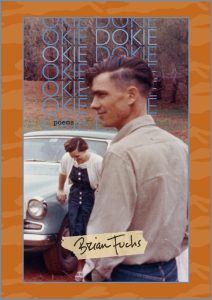
Brian Fuchs, “Triticum aestivum” from Okie Dokie (Scissortail Press, 2019)

Gleditsia triacanthos

You were beautiful once, and maybe you still are.
I rarely revisit those moments when we became adults
on Sunday mornings, skipping church for each other.
I don’t think about the length of your neck
and I don’t dwell on the smell of you skin.
I’ve turned you upside down, exposed the roots
and tried to understand how they worked,
rubbing the soil into the grooves of my skin.
I don’t want to return to your kindness or cruelty,
and I don’t want to put you back how I found you;
Your branches are thorny and I’d end up hurt again.
So, I’ll repaint the photos I have of you in new colors
and we can pretend that there were no feelings.
And I’ll send you copies of the new versions
and you can pretend that you don’t remember.

Notes

Written 18 September 2019 in Payne County, Oklahoma.

Brian Fuchs, “Gleditsia triacanthos” from Okie Dokie (Scissortail Press, 2019)

Cercis canadensis

When we had tried
putting ourselves together again
we’d used the wrong parts,
made effigies of ourselves
with the piles of distorted junk,
left behind scraps of a once-full life.
We went through the motions of people
spoke like them, practicing their accents,
but did not understand our own words.
We got the phrases wrong,
the tones, the memories.
Periodically, we’d erupt into full color
flowers growing from every part
and our days seemed alive with joy.
But we would catch ourselves lost in time,
eyes fixed on a long-abandoned walker,
a long-absent bed,
a long-neglected garden,
at the things we find so important now
and the flowers would fall from our bodies.
I gave up on trying to find the parts
of myself I missed most,
stopped looking for who I had been before. I’ve been more comfortable with discomfort,
waiting for others to finally leave the safety
of their beds, the safety of their tears.
And we’ve started to share ourselves again,
imagining Spring, redbuds flushed fuchsia,
grief removed from our shoulders,
sadness washed from our faces
by the showers of April and storms of May.
We will remember how to be happy
and how to be sad and how to be,
and we’ll see the long-forgotten remnants
and we will understand who we are.

Notes

Written 19 April 2019 in Payne County, Oklahoma. Rewritten 5 September 2019 in Payne County, Oklahoma.

Brian Fuchs, “Cercis canadensis” from Okie Dokie (Scissortail Press, 2019)


Cercis canadensis

When we had tried
putting ourselves together again
we’d used the wrong parts,
made effigies of ourselves
with the piles of distorted junk,
left behind scraps of a once-full life.
We went through the motions of people
spoke like them, practicing their accents,
but did not understand our own words.
We got the phrases wrong,
the tones, the memories.
Periodically, we’d erupt into full color
flowers growing from every part
and our days seemed alive with joy.
But we would catch ourselves lost in time,
eyes fixed on a long-abandoned walker,
a long-absent bed,
a long-neglected garden,
at the things we find so important now
and the flowers would fall from our bodies.
I gave up on trying to find the parts
of myself I missed most,
stopped looking for who I had been before.
I’ve been more comfortable with discomfort,
waiting for others to finally leave the safety
of their beds, the safety of their tears.
And we’ve started to share ourselves again,
imagining Spring, redbuds flushed fuchsia,
grief removed from our shoulders,
sadness washed from our faces
by the showers of April and storms of May.
We will remember how to be happy
and how to be sad and how to be,
and we’ll see the long-forgotten remnants
and we will understand who we are.

Dale

I sought the council of trees, Dale’s name lingering in my head,
hoping to glean wisdom from the aged assembly,
hoping to hear God through the woody branches.
I studied the structure of oak leaves, how each attached to a branch;
watched sunlight fall through the new growth on cedars;
made note of the greenbriar’s leafy fingers wrapping around the trunks of pecans.
The world was still and hot and dotted with tiny white butterflies
emerging from the thickets to enjoy a field of nectar-filled flowers in the afternoon sun.
My mind had been typically cluttered, with family dramas,
thirteen years of grief, first loves, comedy routines,
and parts of a jingle from a TV commercial I remembered from childhood.
Sitting in the surrounding quiet, I waited for the ancient botanical knowledge,
letting those thoughts drop away, heavy and viscous,
and leaving behind a calm in which I could almost hear the butterflies landing on petals.
The wind came gently then, in small bursts that the oaks seem to enjoy,
allowing the trees to flit thousands of leaves about merrily.
A rustle, a calm and relaxing rustle accompanied by silent mimics,
of a host of lesser plants vying for the favor of the post oaks,
standing as the monarchs of this dry woodland.
A slightly stronger breeze, a creaking sound as older specimens swayed,
some long dead, the bony outer branches moaning hauntingly in the current.
The tranquility was broken, butterflies scattered unceremoniously into the air,
having been blown off their perches by a strong wind that moved through the grasses,
flattening it in waves as it moved across the expanses.
When the wind reached the sentinels of trees standing bravely against it,
they found themselves unprepared and leaves and branches erupted into chaos.
Dale had died.
He had been my namesake, the hero and villain of his own stories,
his name lingered, attached to mine as a reminder of who he no longer was
and as a reminder of who he had been capable of being,
a reminder of who we all had been, of what we wanted to say we had been.
And now he was gone. As the gust moved on in the distance,
stillness returned to the trees and I still faced them, waiting for answers.
We were all there, waiting for different pieces, prostrating ourselves before them.
The instructions were lost, the knowledge never passed on,
the person whose position had been placed so highly seeming to fade
with great distances, separated by different trees, grasses, weeds.
His name lingered, attached to mine as a reminder that we should hold on,
hold him up as he fell, his wings revealed to be a mirage.
It was not always enough, we were not always enough,
and we allowed Dale to slip into humanness.
The trees had again become silent. The distances now as close as they would ever be,
as far somehow as they had felt before when inscribed books would
arrive by mail, wrapped in symbols of birthdays or holidays or plainly
when a book had piqued Dale’s desire to share it with me,
a boy he barely knew, but to whom his name was attached.
And there were songs and great conversations, which are things
of which plants know little. And things that had defined him
so importantly that it felt proper to discuss them now, with God or the trees.
The heat had started to intensify; beads of sweat formed on my neck and face.
Still I waited, knowing that lives had become altered, knowing that we had reached
both the beginning and the end of everything.
And I thought about whittled walking sticks, carefully crafted from the new growth.
His name lingered in my mind, attached to the trees, I now realized, a part of it.
The presence of butterflies had increased in my focused state;
they now seemed to be everywhere, clustered on flowers
and dancing through the space between the trees.
I turned and went back to the house, knowing and not knowing,
melding now with the air and grass, with the trees.
And I thought about Dale, his name lingering there, attached to mine,
attached to the moment and those memories,
attached to the wings of hundreds of tiny butterflies
And I smiled because I had known him.

Notes

Brian Fuchs, “Dale” from Okie Dokie (Scissortail Press, 2019)

Written 25 July 2015 in Payne County, Oklahoma.

Geneva

a squash blossom
perfect and lovely
so often overlooked.

Notes

Written 3 January 2010 in Anchorage, Alaska.

Brian Fuchs, “Geneva” from Okie Dokie (Scissortail Press, 2019)