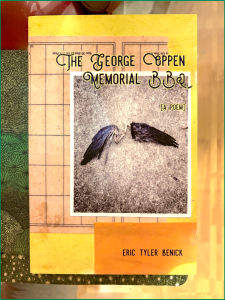
The George Oppen Memorial BBQ
A Poem
Eric Tyler Benick
2019, Poetry

⭐︎🟡⭐︎🟡⭐︎🟡⭐︎🟡⭐︎🟡⭐︎🟡⭐︎

26 September 2025, 7:39 am

My least favorite of my traits is how often I second guess myself.  I don’t allow my instincts to be correct.  It’s always a mistake and one that I suppose I will never allow myself to internalize.  I want to do better; I want to create in the ways that I create naturally, freely, thoughtlessly.

This poem is a reminder to freely open and let the words flow on their own.

I fell in love with the Eric Tyler Benick in the interview that follows the poem.  He writes the way I write.  He is inspired in the ways I am inspired.  He makes me want to be.  I wasn’t familiar with all of his references, but the joy I found in the work has encouraged me to look up George Oppen and add him to my reading list.  I’m very excited about it.

There is always space / in a poem for love / when it is exact.

I really appreciate when a book makes me want to be a better writer. This poem is gold, but even better part of this book is his answers to the interview questions at the back. The author makes me want to try harder, to be more confident in my own words, to continue to peel back and expose the content of my mind.

⭐︎🟡⭐︎🟡⭐︎🟡⭐︎🟡⭐︎🟡⭐︎🟡⭐︎

Started Reading: 26 SEP 2025
Finished Reading: 26 SEP 2025Continue Reading

A Flag To Remember
Stacy Jackson
2019, Poetry

⭐︎🏳️‍⚧️⭐︎🏳️‍⚧️⭐︎🏳️‍⚧️⭐︎🏳️‍⚧️⭐︎🏳️‍⚧️⭐︎🏳️‍⚧️⭐︎

I want to be clear about my intentions with the way I am making the notes on poetry books.  I am not reviewing the books in a classical sense.  My intention is to write my thoughts about the work as I read it.  This is just my ideas and things i might alter or change, and maybe some critique of the work.  It is not intended to overly criticize the author or their work.  I wouldn’t spend time reading an entire book if I didn’t appreciate the work.  That said, I’m giving the books a score based on my own gut reaction to the work.  It’s just my opinion and should be taken with a grain of salt.

⭐︎🏳️‍⚧️⭐︎🏳️‍⚧️⭐︎🏳️‍⚧️⭐︎🏳️‍⚧️⭐︎🏳️‍⚧️⭐︎🏳️‍⚧️⭐︎

23 September 2025, 7:42am

“A Flag To Remember”

I think it can be difficult to write poetry for a cause, even when that cause is important to the writer.  I have struggled with it in my own work, and have increasingly avoided topical or cause-oriented poetry.  In this case, because of the nature of the collection, or what I believe to be its nature, we need something to act as the gates we walk through into the author’s world.  I like this as the opening poem.  It’s a declaration, but I hope it’s also an indication of what to expect.  I think the poem could be tightened up just a bit, and there are some grammatical issues.  I’ve read a lot of self-published poetry, and these are pretty common across those poet’s work.  I think it’s a minor (and easily solved) issue.  I probably won’t mention it throughout, unless there is something egregious.  Good start.

“The Undecided”

Hmm…This is a brief poem, presumably about those whose gender is only defined as a part of cultural norms, but which would otherwise remain nebulous.  Maybe it is nebulous to those individuals still, even though there is pressure to put oneself into the boxes built by our societies.  My only critique of the writing would be that not every poem needs a rhyme.  I suspect now that there will be a heavy emphasis on rhyme, but that’s a talent few possess.  I certainly don’t.  I think if the author wants to be fully honest, she might try not forcing the poetry to rhyme.

“Penchant For Hoodies”

Storytelling.  I could see this whole situation, but it was told is only seven lines.  “Smuggled with goosebumps” is a great line.  It tells me a lot about the speaker.

Title suggestion: “Hoodies”

“An Ordinary Poem”

This little poem is so close to breaking free and becoming something.  I am usually okay with referencing a classic or clichéd poem, but I think maybe this could have started with just the classic lines and then the poem could start to become unraveled until we get to “We know people change / We know people change to.”  Those two lines in particular feel like the start of something else, like a cycle of repetitions interspersed with examples from the author’s life where people didn’t change.  That would start to sound like a chant of hope in a world that doesn’t deserve hope.  Promising, but ultimately flat.

“When you’re rejected by your mother and your father, you’re always looking for someone to replace that love.”

“The Butterfly who is Always Fearless”

I don’t have a lot to say about this.  There are some confusing lines, but it is either a poem to the author herself or to a sibling, so I fear that crucial context is missing and having work like this double checked by someone is good.  They can tell you where there might be some confusion.  I think it does a good job of making me want to know more about who this person is.  I wanted to explore some of those details.

Title suggestion: “Fearless Like A Butterfly”

⭐︎🏳️‍⚧️⭐︎🏳️‍⚧️⭐︎🏳️‍⚧️⭐︎🏳️‍⚧️⭐︎🏳️‍⚧️⭐︎🏳️‍⚧️⭐︎Continue Reading

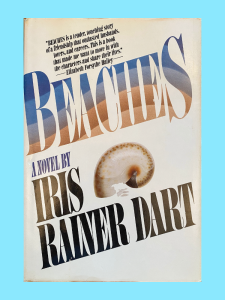
Beaches
Iris Rainer Dart
1985, Fiction, 8/10


The Boardwalk (pp.1-33)
10 September 2025, 8:30am

I’m only three chapters in, and I am trying hard to not compare the book to the film.  I’m finding it difficult to do that.  What I would have loved is just more, and it’s surprising to me.  

We open with Cee Cee in a rehearsal.  

The dancers were holding Cee Cee above their heads. “And now,” she said, “as I lie in the arms of four promiscuous homosexuals from West Hollywood, my tits pointed towards the heavens like an offering to the gods, I slowly turn my head, look out at America and ask the musical question…”

I think this establishes the character beautifully from the start.  I can tell how self-assured and how assertive she is, just from these small bits.  The films softened this moment into a performer who is much more serious, and I think I prefer this choice.

The phone is ringing, and after some time Cee Cee finally gets to it and there is nobody there.  On hearing that the call is from Roberta Barron, she leaves immediately, the director and performers still expecting her to return.

The second chapter features the iconic meeting of Bertie and Cee Cee on the Atlantic City boardwalk.  I was able to form my own characters in my mind based on the descriptions, except for Leona.  Iris Rainer Dart describes Leona so often, referencing her weight especially.  But for me, I can’t get Lainie Kazan off the page.  She is Leona Bloom, and I guess always will be for me.  

The events are sparked by some questionable attention paid to the seven year old Bertie, by her aunt and mother.  The two women are enjoying the sun, their cigarettes, and aren’t worried about the little girl who has lost track of them and ends up meeting 10 year old Cee Cee Bloom, and soon Cee Cee’s mother Leona.  Bertie tags along while Cee Cee goes to an audition, after which she is reunited with her aunt and mother.  One thing I like in the film version that does not happen in the book is how it is established that Bertie (Hilary in the film) comes from money.  There is a scene in the move where the girls get ice cream at the ritzy hotel where they are staying, juxtaposing the upper class lifestyle Bertie comes from.  That is missing in the book, so I never feel as clear on who Bertie’s family is meant to be.  It’s also possible that I missed something from the text. 

I continue to struggle with Leona.  As one of my favorite characters in the film, I’m confused by who she is in the book.  She has all of the determination and attitude I want from her, but she also is described in the way that slim people often talk about fat people—she always seems to have a sandwich in her hand, and everything she does centers around her weight or eating, except of course when it comes to Cee Cee.  I think there could be conversations about weight, but this book wasn’t the one to tackle them.  A more fully formed version of Leona might show her never struggling with her weight, but then dying young from a preventable weight-related issue.  That would at least be commentary.  As it is, Leona is a punchline, but I won’t accept that.  She is raising Cee Cee on her own, she is determined, she doesn’t complain about her own life.  She’s the backbone of the early parts of Cee Cee’s life, so I wish a little more care was taken with her.

The chapters end with letters exchanged, but I’m mildly disappointed that there aren’t more penpal letters between Cee Cee & Bertie, but I’m sure the author didn’t want to make this a four part novel, filled with boring letters.  I would have loved that, but I don’t know if we would have gotten a movie.  One thing that was definitely missing though was dates on the letters.  In a book like this, spanning decades, giving dates to letters helps ground you.  I was annoyed by it, so I flipped through the book and the author has chosen to do that throughout.  I find it a little disorienting, but at least I know to not expect that.

I’m enjoying the book so far.  And while I’m not comparing the book to the film to the best of my ability, the film does give me reference for where the book is and where it is going.  So far, we’ve done the scene of Cee Cee rehearsing her show in Los Angeles and getting the phone call from Bertie; the events from childhood in Atlantic City where the two girls meet and Cee Cee has her audition; Cee Cee getting not he plane to go see Bertie; and I’ve just started the chapter where an 18 or 19 year old Cee Cee has joined John Perry’s company of dancers and singers.Continue Reading

are we nearing the end of the contents of my head?
I’ve spent a lot of time reading my old Xanga & LiveJournal blogs. I used to have a lot to say… about everything. I think I believed that when I got my website that I was required to become an adult somehow. That is surely why I’ve become so passive with my postings. It seems silly now. I’m also going to try to get all of my old posts from those sites added in here. How fun will that be!?!?

My 10 Favorite Ozites (so far):
10. Betsy Bobbin (first appears in Tik-Tok of Oz) Betsy is very similar to Dorothy, but a bit sunnier. She curious and adventurous, but has less of a tendency to argue than Dorothy does. Maybe she is just better because she is from Oklahoma.
9. The Shaggy Man (first appears in The Road to Oz) Shaggy seems to always be around, which is often useful. He’s clever and wise and carries the Love Magnet with him sometimes, which makes people love him. He is one of the kindest of the adult characters in Oz.
8. Eureka the Kitten (first appears in Dorothy and the Wizard in Oz) The best thing about this little kitten is her willingness to eat another character, which she does not get away with. But she still tried. And then, she didn’t feel sorry about it at all.
7. Jack Pumpkinhead (first appears in The Land of Oz) He hasn’t been used much so far, but I like how simple he is. Ignorant, but not completely stupid.
6. The Glass Cat (first appears in The Patchwork Girl of Oz) She made of clear glass and for a while has pink brains that you can see working. Well written cat part, she never really cares about anyone but herself. She does mellow out when her pink brains are changed to clear.
5. Billina (first appears in Ozma of Oz) Originally named Bill, this yellow hen is so sassy that I immediately fell for her. All chickens in Oz are descendants of Billina and are all named Dorothy (hens) or Daniel (roosters).
4. The Hungry Tiger (first appears in Ozma of Oz) I love that this tiger wants to eat babies, but in fact won’t eat anything that is alive because he’d feel bad about it. I am really hoping he is used more, as he has only appeared briefly in the books he’s been in.
3. Tin Woodman (first appears in The Wizard of Oz). Nick Chopper is perhaps the most tender hearted character in all of Oz. He won’t even allow Ojo to kill a butterfly to save the lives of two people. He’s also one of the more level headed characters.
2. Button-Bright (first appears in The Road to Oz). At four, he is adorable, answering “don’t know” to everything. Older Button-Bright is adventurous and brave. He doesn’t complain about anything.
1. Ojo the Lucky (first appears in The Patchwork Girl of Oz). Known at first as Ojo the Unlucky, The Tin Woodman changes it when he decides the reasons for Ojo being unlucky are nonsense. Ojo is kind, he’s fair, and he isn’t afraid to break the law to save a family member. I like that.

I am on book #9 of 40, so my favorites are certainly likely to change.
Characters I DON’T care for: Scarecrow, Scraps the Patchwork Girl, The Wizard, Polychrome*, & The Woozy. Maybe these characters will eventually do something to win me over, but they really haven’t so far. *Polychrome’s role in Sky Island was great, but it isn’t an Oz book.

To Oz:

I have had a lot of related story ideas that are all just starting to come together more clearly as a single book. I think I am going to adapt them to the Ozian universe and write two or three Oz books. I like the idea of my story, but the more I read of the Oz series, the more I feel like my own fantasy book for kids would end up sounding like one of them, so I’m just going to force it. I still think they are well worth reading.

The Empty Frat House:

The guys who lived above me for a year are gone. David & Denis have been furiously working all month to get the place ready for someone new to move it. I’m actually looking forward to seeing who takes it. Those guys were pretty darn rude most of the time. Meanwhile, the silence has been rather nice. Although a sinus infection has been keeping me rather lethargic, I’ve been able to write into the evening without a party starting overhead at midnight. It is nice. The new folks might be night owls like I tend to be, but as long as they don’t pack the place with 20 extra people each night, we should get along just fine. I hope it rents out quickly. I don’t like for Denis to have to worry so much about it.

SaveSave

Trapped Inside

“A particular bear sees a particular this.” — Clifford Chase

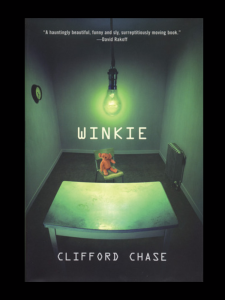
I’ve been reading Winkie, the tale of a teddy bear who is alive. This could easily be a silly childish story, but instead it is haunting and almost sad. I am finding myself identifying with the bear oddly, even though I can’t begin to relate. He is unable to interact with those around him, but feels pain and acts as a witness while the various children who own him grow up. The many years Winkie spends feeling unloved are heartbreaking and I just want to reach out and give him a hug, which can apparently solve all of his problems. Currently, he has just “lost” his last owner, Cliff. Cliff was the second of the six owners to name him, changing him from Marie to Winkie. Somehow the new name connected with his soul and he felt that Winkie is who he had always been. Cliff is older now and hardly pays attention to Winkie. The poor bear, sitting on a shelf, longs to be hugged or touched or talked to or looked at, but he knows that the time has come when he won’t have any other children to love him.

It is exciting to see where this story will go, given the events at the begining of the book (the present). The story opens with Winkie lying in a cabin, emotionally drained and lost. The cabin is surrounded by police searching for a terrorist bomber suspected to live there. Winkie, able to walk and talk, does as he is told and exits the building with his little paws up. After a lot of commotion and commands, shots are fired, one of which strikes Winkie, knocking him to the ground.

At the hospital, the doctors and nurses, sworn to do their jobs, play at reviving the stuffed bear, using all the equipment they can. Winkie refuses to speak to any of them and there is an assumption that he is a female. One nurse, who sneaks in to sew up his wounds, can tell otherwise. Françoise and Winkie enjoy time together, but he never speaks to her either. After waking up his guard, she is arrested in connection with the terrorist attacks because she is Egyptian. Despite her U.S. citizenship, she is linked based on her previous country’s supposed ideals.

Winkie is finally in prison in the story. He was sent to a women’s prison at first, but after Françoise is sent to the same block as he, Winkie is sent to a men’s prison and charged with impersonating a woman. All of this seems quite silly, but I hope it is leading somewhere. Winkie faces so many charges that it took the judge five hours and fourteen minutes to read them all. Among them are one hundred twenty four counts of attempted murder, treason, conspiring to overthrow the United States government, and teaching evolution in schools.

This is an excellent read and I highly recommend it. I will keep you posted on my progress.Continue Reading

Alexander Supertramp

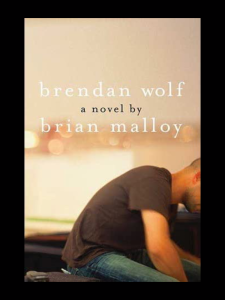
I finally finished reading Brendan Wolf by Brian Malloy. I didn’t throw it across the breakroom like I wanted to either. It frustrated me, but the events that upset me were ones that were obvious from the beginning. I think it was worth my investing in the lives of these characters though.

Throughout the book there are references to Alexander Supertramp, the name Christopher McCandless gave himself while traveling around the country. Alexander Supertramp died in Denali of starvation in 1992.

Brendan Wolf has assumed this name and his real name isn’t revealed until the end of the book. He is hopelessly obsessed with Alexander and the books Alexander loved. He reads them — devours them — over and over.

The plot of the book is a scheme hatched up by his brother and sister-in-law. The plan is to steal money from a donation truck during the March For the Unborn, an anti-abortion rally. Brendan has to become a trusted member of the group in charge of the rally, Babies First, and get a spot as a driver during the rally. Meanwhile, his personal life has started to get in the way. He ends up living with Marv, an older man who Brendan has refused to sleep with, but who had a stroke during an argument about a living arangement. Brendan feels guilty and takes care of Marv when he is released to his home. He is also falling in love with Sean, a hopeless romantic who only knows Brendan by the name Pierre Bezukhov.

This is an amusing read, but one that begs for a sequel. I want to know more about these characters.Continue Reading