
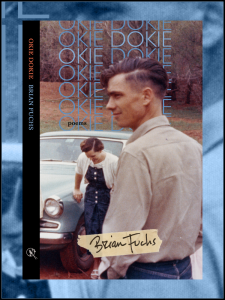
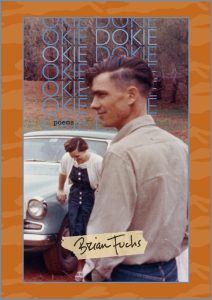
It’s finally out.  And I can finally get some sleep!  Here are the links to my book on Amazon.  I think it looks so much better in paperback, but there is a Kindle version available.

Amazon Paperback

Amazon Kindle

If you don’t already know what’s up, here’s a little backstory.  I’ve been writing since I was a child.  My first poem that I remember was written in October 1988 when I was 9 years old.  When I was 12, my teacher accused me of plagiarism because she didn’t think a child could write.  I don’t say that to congratulate myself at all.  I’m not even sure if that was worth all the aggravation.  It has been lost to time.  It was titled Paige and it was about the life of a woman who never finds happiness.  But I imagine the actual poem would seem completely juvenile now.

I started writing in earnest in college and since 1997 I have written consistently.  While I veer off into other projects, like short stories or novels, I find poetry that I always return to poetry and enjoy writing it.  Over the years, I’ve developed my own style.  That is a good thing.  The problem is that I also haven’t had serious critique of my work since I graduated from college, so I don’t actually know how my work is seen by others.  I’m amazed that I’ve managed to spend the better part of 20 years unwilling to share my work for fear of rejection.  And I really should have managed that sooner!

When I lost Mom last year, the first thing I did was crawled into a metaphorical hole for 9 months.  I wanted to disappear because I didn’t understand how one can live without his mama, and I’m not too proud to say it.  It also brought a few things into focus.  One of those things was letting go of the expectations and opinions of others.  Now, I mean of me as a person, not my work.  That is a lesson that has been taught to me my entire life, but sometimes things need to cook for a while.

So, now I’ve got a book.  I worked diligently over the summer to get it done.  My garden is sad and neglected, my roommate is sad and neglected, and my family… well, they are too busy to have noticed, but if they had I imagine they would feel sad and neglected.  For this first collection of poems (because I don’t want it to be the last!), I wanted to focus on a few things: 1. Poems with very specific references to people.  It’s not that I won’t write that way in the future, but I wanted to give people the words I had written for them before getting into other subjects.  2. Epitaphs.  I’ve lost a lot of people and I often have things to say about that.  I’d like to get through a lot of those I’ve had lying around, but there are many more.  3. My very favorite poems I’ve written… that aren’t too scandalous.  I get it, family will buy this first book. They will even hang on for a second, but by the third they won’t be too fussed about it.  So, I have actually created a plan where my third book is where I completely let my hair down.  That does mean I have to do at least 2 more books, but it also sounds like I’m censoring myself.  In a way I am, but I’m not completely either.  I want my prudish great aunt to be able to have something she will never read, but that won’t make her blush too much if she decides to open it up.

Last thing I will say about it, I decided to make notes on each poem.  Rather than include them in the actual printed book, they can be found here… in the writing tab, or at this link.Continue Reading

1975

I’m sizing him up and putting him
in the him-shaped space left
so long before I was born.
I didn’t call him anything,
but sometimes he is everything
and there are nights when I sit alone
with the stars and wonder
if I make him proud.

21 September 2019

Notes

Written 21 September 2019 in Payne County, Oklahoma.

Brian Fuchs, “1975” from Okie Dokie (Scissortail Press, 2019)Continue Reading

Unpolished

for Skylar

I had found the stone in the snow,
in the space between mountains and ocean,
between rabbits and sandpipers,
between past and future.
I collected her because she is beautiful;
rough hewn and cold,
delicate dusty green nestled in white,
a homogeneous frozen expanse.
I picked her up, rolled her around in my hand,
snow melting through my fingers,
dripping holes into the snow below.
Her texture was porous and it transported me
to the hand of my father’s grandmother.
I’d hold the old woman’s hand as she
told me about her youth, about boys.
Her hands were forged through decades,
shaped and textured in iron-rich soils
and in the kneading of bread.
I recalled boulders along the Red River
where I had not yet learned to be ashamed
of my flamboyance and the swish of my hips.
I remembered running my hands along the surface
of a stone I sat on, my red shoes dangling
above the water streaming by,
wishing I could meld with the river and the trees
and become a part of the mountains of New Mexico.
I looked back at my new treasure, perfectly natural.
I could tumble her as I had tumbled the stones
collected in my youth, from New Mexico
or from my grandmothers garden,
or else purchased at a store especially to polish.
She would shine in the sun, glossy and brilliant,
and her colors would become intense and rich.
I had found the stone in the snow,
in the space between rough and smooth,
between male and female,
between sadness and joy.
I collected her because she is perfect.
I took the rock with me, displayed her
among the treasured glossy specimens,
those enchanting pieces that I admire daily,
somehow now so ordinary.

Notes

Written 17 September 2019 in Payne County, Oklahoma.

Brian Fuchs, “Unpolished” from Okie Dokie (Scissortail Press, 2019)

Daucus carota

for Angela

We came together
to write new chapters
and to tell stories,
if only to ourselves.
Some were writing voluminous sagas,
spending time in cabins
they hoped to translate
like a Boris Pasternak
of Alaska’s near-wilderness.
Others wrote their memoirs,
revealing to us all
just how cold snow can feel
to a Samoan family.
We’d laugh at how ridiculous it all seemed,
and at ourselves because we
are all ridiculous and cold.
I worked on new lines of verse,
wrapped up in myself,
observing and reserved.
We were all doing our part,
all trying to be interesting.
Angela would arrive with carrots,
small globes pulled from her own garden,
and some tea from her travels.
Or beets,
pomelos.
The pomelos she’d purchased
at a grocery store because oranges
and grapefuit
are too ordinary.
They invite no questions.
Her story would transport us
to the places in other states and countries
where she had enjoyed a meal,
or to the soil of her garden,
bursting with vegetables.
And we’d talk about gardening
and the carrots
and hunting.
I would watch her face,
framed with a desire
to be accepted,
to be loved,
appreciated for her carrots and pomelos.
My life would hang there,
uninteresting
and I wouldn’t talk about that with her.
I thought about other Angelas
of my past.
They didn’t share beets with me,
and their offices didn’t have
the sweet aroma of a teahouse,
cinnamon, clove, raspberry,
vanilla, soil.
I wonder about the bonfires
I never attended.
The discarded wood,
the friends and beer.
Was Angela there,
bunch of carrots in hand?
I can see her with the glow on her face
from the brilliant fire,
reflections of children or dogs in her eyes,
smiling because she is happy,
always happy.
What about Faydra?
She has surely lit a few fires
in her solitude.
I wonder how brilliant
the fires used to be for her,
I wonder how dull the fires seem now.
Oh, Faydra!
Faydra
Faydra
I wonder if the carrots help
on the days when things
start to collapse.
I worry about the darkness,
understand it.
When our stories are all written,
will we understand the languages
in which they’ve been written?
I find my own language so difficult,
and I worry about understanding
the bonfires we all set for ourselves,
the interest we take in pomelos,
carrots, cabins, the sun, or
which tea goes best
with happiness.

Written 17 September 2019 in Payne County, Oklahoma

Brian Fuchs, “Daucus carota” from Okie Dokie (Scissortail Press, 2019)

Pieces of Dissected Butterflies

I left Tulsa when my friends had died
and we were all set adrift, angry and lost,
wondering if staying meant more of us would die.
I tried to go to Dallas, to a life I wanted.
They boys swarm thickly there,
and I still wonder if my days would have been
spent in the beds of strangers if I’d gone there.
I’ve always longed for the beds of strangers,
to feel taken for granted and awkward.

In moving, I detoured, finding myself in Anchorage,
near the place where my dad spent his youth,
carried on winds I rode for too long, or just long enough.
I was not qualified for life in Alaska,
not qualified for the men who had gone there.
But I was determined to find myself,
or to find Dad in the places where his friends still lived.
His youth was left in an Alaska that no longer exists,
so my mind found new reasons to keep me there.

I found the spaces I understood,
the pockets of the city that seemed familiar,
bookstores filled with other refugees,
of lives that had started to drift.
My mind invented the things I didn’t know
and the people around me became gods.
I didn’t question that, and I formed a religion.
Their lives were spent being perfect
in ways I could never spend my own life.
They are still gods; I pray to them in darkness,
my soul crying out to be acknowledged.

On cold mornings, I liked to price books,
scanning their barcodes and attaching a sticker.
I would think about my friends,
wonder about the shapes of their bodies,
and worry that they could hear my thoughts.
I’d worry that I was saying the thoughts aloud,
and I’d wait for Kevin to go upstairs to inject his insulin
so I could stop thinking about his waist.
I’m still thinking about his waist.
The decade I’ve had to reflect has made me more curious
and sometimes I worry that he can still hear my thoughts.

I have been dissecting butterflies,
stained glass wings pulled apart
by unwieldy spinning steel fingers
as I think about beauty and conformity,
praying to my gods, mindlessly offering
the insects as a tribute.
I didn’t intend this massacre
and in the lawn lie the tiny lifeless parts.
In the hot sun of the places of my youth,
I don’t have new shapes to fill my mind,
new boys to think about.
I dwell on the boys of my past.

I’m reaching back, feeling myself grasping
for people I can’t always recognize,
the names apparitions in my mind.
Some of the gods’ faces have merged & morphed.
I’m taking the ones I wanted the most,
or the ones I wanted to be the most,
and placing their pieces where I can sort them
and try to hold onto them in my mind.
I’m still thinking about waists and hips and shoulders,
still wondering about the firmness of skin.

They haven’t seen me wondering,
their lives have pulled them toward much happier places,
some growing beautifully in Alaska,
others found scattered by the winds
that had first deposited them near me.
The butterflies are whispering secrets,
understandably warning each other about me.
In new cities and states, in their new lives,
they think about the times we spent together
and I go on thinking about their bodies.

Notes

Written 12 September 2019 in Payne County, Oklahoma.

Brian Fuchs, “Pieces of Dissected Butterflies” from Okie Dokie (Scissortail Press, 2019)Continue Reading

The Ravens Became Crows

I stood two feet away, a witness to the moment
when Alaska started to fade away,
revealing the familiar loneliness of Iowa.
I stood close enough to touch her,
unable to find my arms, unable to find words.
I looked at the harsh black words,
old marker on a scrap of paper, trash.
MY DAD IS DYING
I stood, paralyzed, my body slipping further away,
unable to clear the tears from her eyes,
unable to pull time back and change these events.
She looked at me, and in her eyes I could see
her snow melting, revealing fields of corn.
I could see her ravens becoming crows,
and we shared a silent moment,
knew everything would change.
I stood still for what must have been days,
and when I finally moved my feet, Lisa was gone.

Notes

Written 7 September 2019 in Payne County, Oklahoma.

Brian Fuchs, “The Ravens Became Crows” from Okie Dokie (Scissortail Press, 2019)

My History with Vegetarianism and Veganism

As long as I can remember, I’ve had a strained relationship with food.  I don’t have many food memories stored up, but I remember loving pizza, fruit, cereal, and burgers.  I started gaining weight in 3rd or 4th grade.  It wasn’t so much that I craved food, but that I was eating junk.  I had no idea how to eat properly, and enjoyed chips and candy frequently. By 7th grade, I had repeated stomach problems so severe that I was taken to a doctor who told me to not eat red meat or fried foods.  Ever.  My stomach issues cleared up.  I was able to mostly eliminate red meat and no longer ate fried foods.  My diet was not actually improved; I was only doing the minimum required to not be in pain.  The candies, sodas, and other foods continued.

When I was in middle school I became friends with a kid from a family that was vegan.  He also didn’t eat wheat, salt, or sugar.  Eating at his house felt like being in a different country, and my parents certainly didn’t know how to feed him at our house.  Things were always awkward between him and most other people.  A lot of ridicule was thrown his way, and behind his back he was referred to pejoratively as “veggie boy.”   I defended him, but in my mind the family’s vegan lifestyle was akin to a minority religion.  He was always thin and short, traits that were attributed to his diet.  Vegetarianism and veganism were seem as extreme in Oklahoma culture.  The official state meal, adopted in 1988, consists of fried okra, cornbread, barbecue pork, squash, biscuits, sausage and gravy, grits, corn, strawberries, chicked fried steak, pecan pie, and black-eyed peas.  While one could make a strong argument for at least part of this being designated “Oklahoma Historical State Meal,”  as a current meal it definitely marginalizes plant-based lifestyles.

I started to form my own opinions on eating meat when I was in high school.  Veganism didn’t seem right, or healthy.  My friend seemed to be malnourished, so I made the assumptions everyone else had made.  Still, the idea of eating animals seemed increasingly in conflict with my love of animals.  Love of animals is a misunderstood term, and one that has been a part of who I am for most of my life.  I liked to read about animal behavior in encyclopedias, National Geographic magazines, and in my subscriptions to National and International Wildlife magazines.  I was hooked on natural history and plastered the walls of my bedroom with images from magazines of the animals I liked the most — cats, insects, giraffes, gorillas, dolphins, peacocks, dinosaurs, and many others.  I was starting to see them as fellow inhabitants of the same planet and that belief made it harder and harder to want to see parts of animals cooked up for me to consume.  I wasn’t making a full connection.  It’s easy to forget what the thin round brown disc on a burger actually is.  It’s almost designed to prevent knowing.  I would go back and forth on my willingness to eat animals for a few years.  I found it easier in college; the student union offered a veggie patty that I could have with my Josta soda and I could get a bean burrito or veggie sub for dinner.  Feeding myself allowed me to eschew the animal foods that were generally consumed by other family members.  I still wasn’t terribly strict with myself, allowing myself to enjoy the McDonald’s where my roommate worked.

I drifted away from these values after college.  I have always been an eager people pleaser, and when I started spending time with a group of new friends, I didn’t want to seem odd.  Enjoying the meats they cooked allowed me to fit in better.  I would still try to be mostly plant-based, but did not turn down animal meals either.  I still had issues with eating the animals, but I was more than willing to trade in my personal beliefs to make sure my friends were comfortable.  It’s the only way in which I feel Southern.

Honoring My Values

In 2005, I took an opportunity from my dad to visit Alaska.  He had grown up there and I was eager to see it.  I was working on a novel based on his life at the time, so it seemed logical that I should go see where it all began.  A friend went with me for the first week and I would stay a full month.  My dad had found two places for me to stay, both at the homes of high school friends of his.  At the end of the first week, I had decided I was moving, and my friend was eager to join me.  She returned and orchestrated the move while I continued to stay and look for a job.  The second two weeks of my vacation were spent housesitting for a couple who are vagan.  Even with my history, I found it off-putting.  I would go through their pantry and cabinets looking at all the unusual foods.  It was not what I was used to.  And I didn’t fully embrace the experience, as I should have.  I took pleasure in buying fried chicken and eating it in the living room, a secret act of defiance.  I’m still sad about that situation.Continue Reading