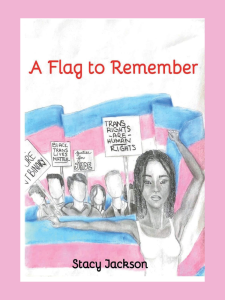
A Flag To Remember
Stacy Jackson
2019, Poetry


I want to be clear about my intentions with the way I am making the notes on poetry books.  I am not reviewing the books in a classical sense.  My intention is to write my thoughts about the work as I read it.  This is just my ideas and things i might alter or change, and maybe some critique of the work.  It is not intended to overly criticize the author or their work.  I wouldn’t spend time reading an entire book if I didn’t appreciate the work.  That said, I’m giving the books a score based on my own gut reaction to the work.  It’s just my opinion and should be taken with a grain of salt.


23 September 2025, 7:42am

“A Flag To Remember”

I think it can be difficult to write poetry for a cause, even when that cause is important to the writer.  I have struggled with it in my own work, and have increasingly avoided topical or cause-oriented poetry.  In this case, because of the nature of the collection, or what I believe to be its nature, we need something to act as the gates we walk through into the author’s world.  I like this as the opening poem.  It’s a declaration, but I hope it’s also an indication of what to expect.  I think the poem could be tightened up just a bit, and there are some grammatical issues.  I’ve read a lot of self-published poetry, and these are pretty common across those poet’s work.  I think it’s a minor (and easily solved) issue.  I probably won’t mention it throughout, unless there is something egregious.  Good start.

“The Undecided”

Hmm…This is a brief poem, presumably about those whose gender is only defined as a part of cultural norms, but which would otherwise remain nebulous.  Maybe it is nebulous to those individuals still, even though there is pressure to put oneself into the boxes built by our societies.  My only critique of the writing would be that not every poem needs a rhyme.  I suspect now that there will be a heavy emphasis on rhyme, but that’s a talent few possess.  I certainly don’t.  I think if the author wants to be fully honest, she might try not forcing the poetry to rhyme.

“Penchant For Hoodies”

Storytelling.  I could see this whole situation, but it was told is only seven lines.  “Smuggled with goosebumps” is a great line.  It tells me a lot about the speaker.

Title suggestion: “Hoodies”

“An Ordinary Poem”

This little poem is so close to breaking free and becoming something.  I am usually okay with referencing a classic or clichéd poem, but I think maybe this could have started with just the classic lines and then the poem could start to become unraveled until we get to “We know people change / We know people change to.”  Those two lines in particular feel like the start of something else, like a cycle of repetitions interspersed with examples from the author’s life where people didn’t change.  That would start to sound like a chant of hope in a world that doesn’t deserve hope.  Promising, but ultimately flat.

“When you’re rejected by your mother and your father, you’re always looking for someone to replace that love.”

“The Butterfly who is Always Fearless”

I don’t have a lot to say about this.  There are some confusing lines, but it is either a poem to the author herself or to a sibling, so I fear that crucial context is missing and having work like this double checked by someone is good.  They can tell you where there might be some confusion.  I think it does a good job of making me want to know more about who this person is.  I wanted to explore some of those details.

Title suggestion: “Fearless Like A Butterfly”


24 September 2025, 8:51am

“Glitter took over my lips as the pain escaped my soul.”

“Minimalist”

This is how the world should be.  In a perfect society, people would be free to their expression and there would be no cultural expectations on one’s gender.  And in that world, no one’s gender would even be questioned.  While nobody should feel obliged to announce their gender, in a more ideal world one’s gender wouldn’t even be announceable.  I have the benefit of living in a world where my own gender and sex are aligned and unquestioned, so maybe I have a lot to learn.

Title suggestion: “Less Is More, More Is Less”

“My biggest mistake was waiting for you to be ready, to meet me.”

“Breadcrumbing Revenge”

I’m not being dismissive, but this is some personal baggage.  I’m not sure if I quite grasp the final line: “You pity the men who taste the cold.”

Title suggestion: “The Junk Yard”

“Coterie Children”

I want the author to rewrite this about five more times.  The issue is that there is such good stuff in here, but I had so many hurdles to get to it.  The grammar and punctuation are jarringly erroneous.  I don’t think things need to be perfect to get across a point of view, or even that following traditional rules of English are necessary, but these errors in this one feel like mistakes.  I also think this could go further, more narrative, more internal dialogue from the speaker.  The picture that was painted was so familiar to my own school experience, and I like when a writer can put me in their own shoes.

Title suggestion: “Friends”

“Sorry, My Heart Is Home”

“The Hood Of This Woman”

This reads as a celebration of the embracing of one’s identity as a woman.  I can only assume that the author intended that, and I think it’s a lovely piece.  However, I almost wish this was written to God or the Universe or whoever the author thinks is responsible for all of this, like a celebration of the existence of women in general.  In the context of the collection, I think celebrating the concept of women would read as stronger, as other poems connect the author with the concept.  There are a lot of things in here to like.

Title suggestion: “The Making of a Woman”

“No Parent”

This is emotionally difficult for the writer.  “Passing connecting” is a difficult to read pair of words.  Normally, I would say that should be reworked, but it did make me think that writing parents who refuse to see you might make for an opportunity to go even further, to add more language that the brain and tongue struggle to get through.

“A Lover of Words”

Oh, oh…this!  This is my favorite so far, by a huge margin.  I adore this piece, maybe because it reminds me of how I write sex.  It’s so expressive.  I love it so much that I wish the title matched how strong it is.  Maybe it has some esoteric relationship with the lines, but I don’t know.  I am notorious for changing titles over and over because I never settle on them; I’m not one to criticize a title.  I personally would pad this out about 20% more, but it’s fantastic!  I really appreciate this following the poem about the terrible parents.  That feels effective, even if it isn’t intentional.

Title suggestion: “His Biography”

“The Only Pearl”

I want the author to rewrite this about five more times.  The issue is that there is such good stuff in here, but I had so many hurdles to get to it.  The grammar and punctuation are jarringly erroneous.  I don’t think things need to be perfect to get across a point of view, or even that following traditional rules of English are necessary, but these errors in this one feel like mistakes.  I also think this could go further, more narrative, more internal dialogue from the speaker.  The picture that was painted was so familiar to my own school experience, and I like when a writer can put me in their own shoes.

Title suggestion: “Consumed”

“The Infancy Stage”

I’m initially confused by the title, but the poem itself is important.  “I don’t see color” is the racist cry of people who don’t understand how racist they are.  Some of them think of themselves as allies, but their allyship is rooted in a White savior complex, the empathetic & compassionate arm of White Supremacy.  It becomes obvious when those people start saying things like “I don’t care if someone is Black or White or Purple or Polka-dotted….”  They have to include versions of people that they wouldn’t see as the same, outlandish.  It’s a form of dehumanization, but so deeply ingrained that they don’t always understand their own biases.  I love reading about the beauty of melanated skin, the way it glows, and the ownership of it.  I would like to read more about this, so maybe I can unpack it fully, but I have found it odd that part of American Black culture is to identify with kings & queens.  It’s not something I understand.  Not everything has to be for me!  But I’m interested in learning more.  I certainly accept those titles in queer culture, so I’m probably being ignorant about that.

Title suggestion: “Seeing Color”

“She is Queen”

I’m not sure what is going on.  She did this, he did this, you did this.  I’m disoriented because I am not sure who any of the people are throughout.  I feel bad saying that; I can tell this is a deeply personal piece, but I just don’t quite get it.

Title suggestion: “The Queen”


25 September 2025, 9:55am

“The Tea, Is Time”

“They don’t drink tea, / but they boil the water.”  There are moments when Stacy Jackson surprises me.  I think those two lines are so good.  This poem is brief and it is fine overall.  I think it would be more effective if she had shown, rather than told.  There’s an opportunity to make the tension and heat rise throughout them piece, starting playfully as it does.  Give me some metaphors, some allusions, some deeper references.  

Title suggestion: “Boiling Water for Tea”

“Not To Be Uttered”

There are poems throughout, and I’ve probably noted this before, where the poems are so personal, but also so lacking in detail, that the reader couldn’t possibly glean meaning from them.  I remember when I was first writing all the time in college, many of the poems I wanted to write had to do with my own family.  But I would put them on paper, only to find that some things require a lot of backstory to be clear.  Even worse, I would find that as much as I loved these people (in my case), writing their stories was often boring.  Their lives weren’t boring; I was not yet skilled enough as a writer to tell those stories.  The poems in this book that deal with the people who I assume are the poet’s family, aren’t poorly conceived.  I can see where she is coming from in wanting to tell her story there, but I think they aren’t fleshed out enough.  To really delve in to those stories, rewriting and rewriting and rewriting might be required.  

Title suggestion: “Hide a Little”

“MUM”

I like the flow of this one, and the author is doing a better job of telling me who her family is.  I think it would benefit from repetition, maybe starting each line in the first and third stanza’s with “You remember when…”  That would make the second stanza stand out more, but also give a little more of a rhythm to the poem.  

“Existing Alone”

Simple, effective.  As I keep saying, it reminds me of the poems I was writing around 1998, when I was young and didn’t have much to look back on in my life.  I have a poem that is so similar to this one, the sort of coming of age declaration piece.  

“Sounds About White”

So good.  “can you repeat the question again?…  I was distracted with the community knowledge.”  I love that so much.  This poem is nicely crafted.  I would want the name of the film, unless it is meant to be that the writer couldn’t remember the title, in which case I would like that to be clearer.  Excellent stuff in here.

“Nipsey’s Hussle”

Sometimes we need to write down a little talk with ourselves.  In the overall context of this collection, I think that works well, and she does it throughout.  I liked the little asides.  They don’t seem to be narratively sequenced.  It might have been nice if the author wrote a timeline to adhere to for both the family stories and for the poems to herself.  Not one timeline for both, but two separate time lines going on to hop back and forth between, and then to have the sort of trans-affirming pieces mixed in.  

Title suggestion: “And Then Open Your Eyes Again”

“Island It’s Free”

One of my favorite books of all time is Ntozake Shange’s Sassafrass, the poetic novella she wrote that would eventually be adapted into a full novel.  Shange writes the entire poem in the way the characters would speak, inserting their dialects by way of altering the spellings of words.  It’s so beautiful, and this poem is doing a lot of the same thing.  She has that same ability to convey how a person sounds through the spelling choices.  I’d love to see more of it!

Title suggestion: “Di Way Him Looks At Yuh”

“Proper, Is Its Truest Form”

Love. The picture is so clear to me.  I’m not sure the title fits the poem, but otherwise it is great.

Title suggestion: “Proper”

“Love begs for forgiveness”  

Title suggestion: “Thy Kingdom Come”

“Never been kissed, Again”

I’m thinking that Stacy Jackson needed a second book, one about herself and her own life.  I think she sees her own experiences as wholly related to her trans identity, and is some ways her story is very important to include in the story of trans people in America today.  It’s not an uncommon story, but her individual story has taken over, which then takes away a little from the subtitle of the book Trans Experience Poetry, Intersex Identity & Inspirational Quotes.  In her defense, the author didn’t promise broad trans experience.  But it did feel like that was implied.  Maybe having the book appear to be more personal would help ground it in a story about herself and being trans, rather than how it is currently packaged as a collection of poems about the broader trans community.  I don’t know; I don’t want to be too critical of the choices, but I do think there were two books here, A Flag To Remember, an anthology of trans poetry.  It’s a lot of work, but getting other authors involved and having the author be the editor would have been interesting, and separately a poem of personal situations that further the poet’s own story.  

Title suggestion: “One Pinch Away From Too Much Sugar”

“Open Letter”

I like this.  I’m not sure, but if it were me (and it’s not!), I would try out reworking the lines as prose.  Not rewriting, just reformatting.  I don’t know which would work better, and maybe the author did play around with it and arrived at this being in its current format.

Even though I think this is a strong poem, I think a lot of these things are things we’ve heard before.  The unconvinced don’t hear them anymore, not only because they don’t want to, but because it’s always the same list of things, and I wonder if the author could include some things we haven’t thought about.  I can’t say what those things are, but small details.  Small inconveniences about being trans in a world not oriented toward that.  I might like to have a mix of small and big issues.

I am very much hoping that there is a follow up with a list of reasons the author would choose to be trans.  Maybe she’s not there yet; society certainly isn’t, but I hope she does feel that sometimes.  It’d be nice to see it in this book, but based on how things have been written, I doubt it.  She seems very much stuck in the negativity of it all, and it’s no wonder she is.  This was in 2019, and the world was only just becoming increasingly hostile to the trans community.  In 2025, I couldn’t imagine looking for silver linings.  I just hope for a world where that can be the case.

“When people bring up the past, tell them Jesus dropped the charges.”

“The Baby’s Day Out”

“Time, when there’s No Clocks”

“You wonder how your family looks now” is such a sad line.  I like how she painted a picture of a small moment when her thoughts, her sadness, was interrupted by an absurdity.  It read like that moment, and I appreciate that the author doesn’t go back to the thoughts.  You wouldn’t, would you?  That little interaction with the other shopper hitting you with a cart would snap you back into the present and you wouldn’t just return as you had been.

Title suggestion: “Clocked!”

“The Check Is Blank”

This has a lot of potential that isn’t quite realized.  I want more, deeper…not too much, but just a little bit further.

“Cupid Shoots To Kill”

Fantastic!  I really love the way this is written and the storytelling.

“Kitty Litter”

Put away the thesaurus.  It’s not always helpful, and this is the first time I’m being asked by the poet to work for understanding.  Some poets like to do that to the reader, like TS Eliot.  But Stay Jackson doesn’t write that way, so it seems like a lot to include two esoteric words here.  I have done it too, but I try to use them for effect, and I’m not sure there was an attempt at an effect here.  

I’m also unclear as to who this woman in the poem is.  Why do were care about her, or do we?  I think there are some nuggets in here of interesting phrasing, but I’m not sure I get what is going on.

“Made Up People”

This feels like something I would have placed as the first piece in the book.  I like what is being said, and I also appreciate the sadness of “Am I real mother?” going unanswered. 

“Secret White Emails”

This is such a specific experience, and I love this poem for that.  Stay Jackson keeps touching on these trans-specific issues in a really good way.  I just wish that these poems were separate from what feels like her life story in ways that aren’t exclusively about being trans.  It’s complicated.  I like this one though. 

“Forgot, He left”

“Gripping Onto It Firmly”

Beautiful phrasing.  I’ve written pieces like this and I love them written by others.  It’s the internal that seems like so much more than the situation.  It’s heartbreaking, and could be more heartbreaking.  Lean in.  But ultimately, very nice. 

Title suggestion: “No Man”

“Your Grandmother’s Folklore”

I absolutely adore this.  I like the realness in the dialogue.  I’ve been confused or critical of the titles throughout this book, and this one seems like it makes sense, but ultimately I think it needs updated.  I might have titled it “Fairies” or “The Rainbow” or something like that…maybe even just “Folklore.”  Because the grandmother isn’t part of the scene, I’d leave her out of the title. But it’s a fantastic moment.

Title suggestion: “The Rainbow Fairy”

“DNA, Is What He Calls It”

It’s hard to embarrass me with a poem, but this is a little steamy.  Because the poet is going for structure, I want more attention to that structure.   

Title suggestion: “Sting Me”

“Pit Bulls”

Great storytelling; needs a slight amount of editing.   

“Your Brother’s Wedding”

It’s just hit after hit at this point!  I really love this, even thought it is devastating. “You may have not the body you want but you have the brain that you need.”    I’d rework that line slightly, but it’s a great part of this moment.

“The Neighbor’s Husband”

This poem is brutal in its honesty, and I hope not to the poet’s detriment.  It’s real life, it’s gritty, it’s both beautiful and ugly at the same time.   


26 September 2025, 6:25am

My copy of A Flag to Remember with variant cover

Final Thoughts

A Flag to Remember was not the book I thought I wanted, but it was an honest and open collection of the author’s life stories.  Stacy Jackson is young; her poems definitely read as a writer who lacks some of the experience that will come with age.  That isn’t a comment on her capacity to grow and flower into an amazing poet.  There are so many bits throughout where I can see that spark, the flashes of brilliance that if nourished will take her to great heights.  I wasn’t able to find anything about her.  She doesn’t seem to have a social media presence.  This book is nearly 6 years old now, and I’d like to find out if she is still writing and how her writing have evolved.

My primary issue with the book is that while I love what Stacy Jackson wanted to do, the concept falls apart pretty quickly.  It’s more a personal narrative that isn’t often about her trans-ness, and that’s still an interesting story.  I was just missing what the subtitle suggested: Trans Experience Poetry, Intersex Identity & Inspirational Quotes.  

On the quotes, these are not quotes.  One cannot quote oneself.  These are micro poems or thoughts.  If it were me, I would restructure them all into micros and lose a few that are a little clichéd.  There are a lot of inspirational quotes by queer & trans folks that would work in the book.  Use those as well.

I think there’s more to this story.  I think the author would benefit from critique, proofreading, editing, all that.  That’s something I know I didn’t know I needed when I was first starting to write.  My college creative writing classes were probably the most valuable classes I ever took.  The opened me up to criticism, and allowed me to remove myself from my work once I was done, to allow others to read it from their perspectives, and to give me honest feedback about that.  It’s so important to know if your message is being conveyed, otherwise what is the poem for? 


Started Reading: 23 SEP 2025
Finished Reading: 25 SEP 2025

A Flag To Remember
Stacy Jackson
2019, Poetry
Self Published
18 November 2019
English
ISBN #978-1078744881

Notes

Written 19 May 2008 in Anchorage, Alaska.

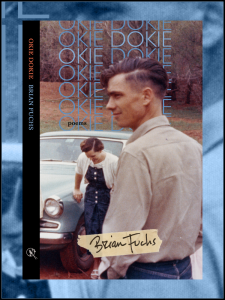
Brian Fuchs, “Oil Man” from Okie Dokie (Scissortail Press, 2019)


Posted 21 September 2020

Notes

Written 1 October 2018 in Payne County, Oklahoma.

Brian Fuchs, “Duncan, Oklahoma” from Okie Dokie (Scissortail Press, 2019)


Posted 29 August 2020


Written 2 April 2008 in Anchorage, Alaska.

Brian Fuchs, “To a Lovely Man” from Okie Dokie (Scissortail Press, 2019)


It’s finally out.  And I can finally get some sleep!  Here are the links to my book on Amazon.  I think it looks so much better in paperback, but there is a Kindle version available.

Amazon Paperback

Amazon Kindle

If you don’t already know what’s up, here’s a little backstory.  I’ve been writing since I was a child.  My first poem that I remember was written in October 1988 when I was 9 years old.  When I was 12, my teacher accused me of plagiarism because she didn’t think a child could write.  I don’t say that to congratulate myself at all.  I’m not even sure if that was worth all the aggravation.  It has been lost to time.  It was titled Paige and it was about the life of a woman who never finds happiness.  But I imagine the actual poem would seem completely juvenile now.

I started writing in earnest in college and since 1997 I have written consistently.  While I veer off into other projects, like short stories or novels, I find poetry that I always return to poetry and enjoy writing it.  Over the years, I’ve developed my own style.  That is a good thing.  The problem is that I also haven’t had serious critique of my work since I graduated from college, so I don’t actually know how my work is seen by others.  I’m amazed that I’ve managed to spend the better part of 20 years unwilling to share my work for fear of rejection.  And I really should have managed that sooner!

When I lost Mom last year, the first thing I did was crawled into a metaphorical hole for 9 months.  I wanted to disappear because I didn’t understand how one can live without his mama, and I’m not too proud to say it.  It also brought a few things into focus.  One of those things was letting go of the expectations and opinions of others.  Now, I mean of me as a person, not my work.  That is a lesson that has been taught to me my entire life, but sometimes things need to cook for a while.

So, now I’ve got a book.  I worked diligently over the summer to get it done.  My garden is sad and neglected, my roommate is sad and neglected, and my family… well, they are too busy to have noticed, but if they had I imagine they would feel sad and neglected.  For this first collection of poems (because I don’t want it to be the last!), I wanted to focus on a few things: 1. Poems with very specific references to people.  It’s not that I won’t write that way in the future, but I wanted to give people the words I had written for them before getting into other subjects.  2. Epitaphs.  I’ve lost a lot of people and I often have things to say about that.  I’d like to get through a lot of those I’ve had lying around, but there are many more.  3. My very favorite poems I’ve written… that aren’t too scandalous.  I get it, family will buy this first book. They will even hang on for a second, but by the third they won’t be too fussed about it.  So, I have actually created a plan where my third book is where I completely let my hair down.  That does mean I have to do at least 2 more books, but it also sounds like I’m censoring myself.  In a way I am, but I’m not completely either.  I want my prudish great aunt to be able to have something she will never read, but that won’t make her blush too much if she decides to open it up.

Last thing I will say about it, I decided to make notes on each poem.  Rather than include them in the actual printed book, they can be found here… in the writing tab, or at this link.

Quentin Clingerman Has Died

The winds are picking up
blowing trash into my yard
and announcing a storm that will
fall apart before it arrives.
The worn out flags and crosses
still look as majestic as they did,
but I’m opening by insides
and filling my pages with secrets.
I’m waiting for critiques
by entrenched folks who think
too much about the sex lives
of other people, of my sex life.
I want to reveal myself again,
try to make people see my words
and my techniques and stop worrying
about who I’ve kissed or
who I haven’t, but wanted to.
I want to edit volumes of poetry
about God and America and guns,
poems filled with the lies we tell ourselves
and enjoy them because the author
knew how to write the words beautifully.
I don’t want to read the judgement.
It starts to rain and I’m surprised;
I thought the rain would miss us.

Notes

Written 21 September 2019 in Payne County, Oklahoma.

Brian Fuchs, “Quentin Clingerman Has Died” from Okie Dokie (Scissortail Press, 2019)

Gleditsia triacanthos

You were beautiful once, and maybe you still are.
I rarely revisit those moments when we became adults
on Sunday mornings, skipping church for each other.
I don’t think about the length of your neck
and I don’t dwell on the smell of you skin.
I’ve turned you upside down, exposed the roots
and tried to understand how they worked,
rubbing the soil into the grooves of my skin.
I don’t want to return to your kindness or cruelty,
and I don’t want to put you back how I found you;
Your branches are thorny and I’d end up hurt again.
So, I’ll repaint the photos I have of you in new colors
and we can pretend that there were no feelings.
And I’ll send you copies of the new versions
and you can pretend that you don’t remember.

Notes

Written 18 September 2019 in Payne County, Oklahoma.

Brian Fuchs, “Gleditsia triacanthos” from Okie Dokie (Scissortail Press, 2019)

Pieces of Dissected Butterflies

I left Tulsa when my friends had died
and we were all set adrift, angry and lost,
wondering if staying meant more of us would die.
I tried to go to Dallas, to a life I wanted.
They boys swarm thickly there,
and I still wonder if my days would have been
spent in the beds of strangers if I’d gone there.
I’ve always longed for the beds of strangers,
to feel taken for granted and awkward.

In moving, I detoured, finding myself in Anchorage,
near the place where my dad spent his youth,
carried on winds I rode for too long, or just long enough.
I was not qualified for life in Alaska,
not qualified for the men who had gone there.
But I was determined to find myself,
or to find Dad in the places where his friends still lived.
His youth was left in an Alaska that no longer exists,
so my mind found new reasons to keep me there.

I found the spaces I understood,
the pockets of the city that seemed familiar,
bookstores filled with other refugees,
of lives that had started to drift.
My mind invented the things I didn’t know
and the people around me became gods.
I didn’t question that, and I formed a religion.
Their lives were spent being perfect
in ways I could never spend my own life.
They are still gods; I pray to them in darkness,
my soul crying out to be acknowledged.

On cold mornings, I liked to price books,
scanning their barcodes and attaching a sticker.
I would think about my friends,
wonder about the shapes of their bodies,
and worry that they could hear my thoughts.
I’d worry that I was saying the thoughts aloud,
and I’d wait for Kevin to go upstairs to inject his insulin
so I could stop thinking about his waist.
I’m still thinking about his waist.
The decade I’ve had to reflect has made me more curious
and sometimes I worry that he can still hear my thoughts.

I have been dissecting butterflies,
stained glass wings pulled apart
by unwieldy spinning steel fingers
as I think about beauty and conformity,
praying to my gods, mindlessly offering
the insects as a tribute.
I didn’t intend this massacre
and in the lawn lie the tiny lifeless parts.
In the hot sun of the places of my youth,
I don’t have new shapes to fill my mind,
new boys to think about.
I dwell on the boys of my past.

I’m reaching back, feeling myself grasping
for people I can’t always recognize,
the names apparitions in my mind.
Some of the gods’ faces have merged & morphed.
I’m taking the ones I wanted the most,
or the ones I wanted to be the most,
and placing their pieces where I can sort them
and try to hold onto them in my mind.
I’m still thinking about waists and hips and shoulders,
still wondering about the firmness of skin.

They haven’t seen me wondering,
their lives have pulled them toward much happier places,
some growing beautifully in Alaska,
others found scattered by the winds
that had first deposited them near me.
The butterflies are whispering secrets,
understandably warning each other about me.
In new cities and states, in their new lives,
they think about the times we spent together
and I go on thinking about their bodies.

Notes

Written 12 September 2019 in Payne County, Oklahoma.

Brian Fuchs, “Pieces of Dissected Butterflies” from Okie Dokie (Scissortail Press, 2019)

Seahorses

We struggle for life, gasp for water
and we die, wriggling and contorting into position.
Our dried carcasses serve as amusement.
Fifty years we’ve been on display,
dust gathering in our rigid and bony structures,
souvenirs for those whose lives were more exciting.
They pull us out to reminisce about their wild youth,
our magic now stripped by time,
and they talk to each other about us and how they miss us.

Some of them forget about us,
about how we thrived in the waters before being rescued,
collected as memorials.
They don’t know about the vibrant reefs like we do,
about the others who didn’t make it or we carried back
to other grey places where they too would be forgotten.
Many of us are labeled for easy identification,
classified and sorted so onlookers can gaze at our husks
in wonderment or disgust… or a bit of both.
Our tiny bodies have become too numerous,
too many have been broken or discarded,
but most of us will fade into the dark obscurity, lost.

The new fashion has been to provide a tank,
to adopt a bit of our habitat and collect several specimens,
lives lived with names and memorialized
as members of families, temporary and disposable.
We exist as novelty, and still a part of their youth,
a part of that colorful past they will talk about one day,
sharing the photos with their children and grandchildren.
They’ll talk about us, about how much they love us,
pulling us from the drawers and boxes to prove themselves,
they’ll show videos they took of the tanks filled with water,
convinced that they are showing great love for us.
But when they are no longer beings asked to show off
their specimens, their carefully curated collections,
they’ll put us away again and go back to their real lives.

We will keep wishing that our dried bodies would stop
finding their way into souvenir shops of those who
do not want to dip into the water and experience our lives.
We don’t want to live in tanks either, playthings of people
who do not understand that our beauty has not been for them,
that our magic was meant for ourselves.

The sun is coming up on the horizon,
Christopher Street is quieter than it used to be,
and I wonder if a generation is coming
who will realize the world that was fought for,
and I wonder if they will long for the days
when they were precious trinkets of other people’s youth.

Notes

Written 1 July 2009 in Anchorage, Alaska & 5 September 2019 in Payne County, Oklahoma.

Brian Fuchs, “Seahorses” from Okie Dokie (Scissortail Press, 2019)

Original version

anti-discrimination ordinance

Round Three!

I don’t know the outcome of tonight’s assembly meeting, but the testimonies and the images of people with signs has me thinking.

One of the most striking things — and the most obvious — is the separation of folks into blue shirts (those supporting the anti-discrimination ordinance) and red shirts (those opposing the ordinance). For some reason, my mind keeps going back to the time two of my closest friends chose ignorance over me. At the time, there was a day on campus when those in support of the GLBT community were told to wear jeans. My friends, fearing what others might think, wore khakis that day. They did at least feel guilty enough to confess to me that they had done that, but I’m sure they didn’t realize how hurtful it was for me to hear. I’ve never been able to get past that event. It is clearly one of the things that has pushed us apart as friends.

Seeing large groups of people whose agenda is to spread intolerance is difficult enough, but when they involve their children it is even worse. These kids should not be spending their time protesting people they’ve been taught to not understand. They appear bored, or in the case of the ones who are young enough, excited to be a part of something that seems so important. It is unfortunate that they don’t understand what it is they are doing. It saddens me that we live in this world.

I know far too many people from the “red shirt” side of things. These folks are family or have been close friends of mine over the years and I suppose it never dawned on me to be offended by this behavior. I guess I thought knowing me would eventually be enough, but it isn’t anymore. Those whose ignorance taints our relationship aren’t as welcome in my life as they used to be.

John’s blog — including blogging as the assembly meeting took place Wednesday evening
Heather’s blog — including blogging from the previous assembly meetings as well as transcripts.

reading

It has slowed a little, but I’m still on my reading kick. Today I read The Little Guide to Your Well-Read Life by Steve Leveen. This little book was pretty helpful for learning how to read and when. It makes a lot of points in a small amount of time. I especially liked the idea of organizing your bookshelves into “book candidates,” “books I’ve read very recently,” and “books I’ve read.” It seems obvious, but I have a tendency to arrange my shelves by genre. I then have to scan my shelves for a new book to read, waiting for one to jump out at me. He also talks about having many more books than you will ever read at home, an idea that has always seemed natural to me, but for which I guess I needed permission.

I’m still making my way through the 4th Harry Potter book, my friends having finished the series already. I find myself easily distracted, reading other things at the same time. My Folks Came in a Covered Wagon has been somewhat interesting too.

I’d like to be a part of a book group again. Maybe I’ll start one up if I can’t find one I like.

The fight continues…

Adding the GLBT community to Anchorage’s anti-discrimination law has been quite the journey. For those who are unfamiliar, this all started in the 70s. At that time, there was a proposal to add sexual orientation to the state’s existing anti-discrimination policy. That proposal passed, but was vetoed by the mayor at the time. A few weeks later, the proposal passed again. Once again, the mayor vetoed. In the early 90s, an anti-discrimination policy including sexual orientation was enacted, but later repealed by a different assembly.

It is ludicrous that we are having this debate. It is absolutely insane that it is so accepted to play with other people’s protections. It isn’t enough to deny actual rights to gay and lesbian couples, these people go the extra step to ensure that members of their own community are not protected from employers or bankers who bring misguided religious beliefs into their business decisions. The proposed ordinance would prevent a person being turned down for housing based on sexual orientation.

Opponents of the ordinance feel that this would be pushing homosexuality on heterosexuals. What they really mean by that thought is they don’t want their right to exclude people they don’t understand taken away. They want to impose their own religious beliefs on others. And that is where their argument makes no sense. This is not a religious matter, but a civic one. Religious belief should keep away from it.

As a Christian myself, this sort of hate-mongering really gets under my skin. It isn’t in keeping with the lessons of love that dominate the Bible. It is such a non-issue. How is it that something so obviously not a part of Scripture has been concluded from it and used to oppress friends and neighbors. What hurts the most from these folks is the very common claim of several gay friends. Why would a person support something that prevents protections from people they refer to as friends. Ludicrous.

And really it all comes back to a larger issue. I’ve been working on some research on gay books and stumbled across a particularly irritating one. The premise of this title was to arm Christians with arguments against the new gay Christian movement. Are they serious? The synopsis claimed that this was an outreach; it stated that there was still hope for these gay Christians and that it was not their goal to push people away from God. Are they serious??? It makes me angry that there are actually Christians out there who are upset that other people are Christians. I think the worst part was the comment by a woman about her gay son. The hate in her comment made me feel so sad for her son that this sort of thinking exists in our world. And I felt so blessed to have the parents I have.

Why does this not make perfect sense to everyone else? How is it that we don’t wish for everyone to be happy and healthy and secure? How can we want anything except love and acceptance for everyone on our planet? I cannot wrap my mind around how parents can send their young children to protest the protections of other people.

Fortunately, the GLBT community is not alone. If we were, concerns about changing laws wouldn’t be as prominently on our minds. We have on our side an army of allies from the straight community who have taken up this fight, having recognized what I mentioned before. This is about friends, neighbors, family members. I owe these allies so much.

Heather & John have done more than anyone I know in Alaska to try to make sure it is a better place for me. I’m humbled by their diligence and cannot begin to express my gratitude. Anchorage Baptist Temple should look to these two as examples of how to treat other human beings. Neither approaches with hate, but with understanding, even when that understanding is for someone whose opinions makes very little sense to their own beliefs.

It is amazing to know people like this.

SOSAnchorage Blog

Enjoying Alaska

Last week, we celebrated Dru’s 30th with merriment at David & Daniel’s house. It was a nice evening, if a bit rainy. I love being surrounded by friends and these moments just seem perfect. We talked into the night in the relative closeness of the dining room and kitchen. But it was nice. Liz & Joan are talkative and enjoyable people to be around and I only regret that I tend to clam up in groups and enjoy the being rather than the interacting. Daniel and David are great hosts.

Tuesday, we celebrated Denis’ birthday with a similar soiree. We’d planned a small cookout, but surprised him with presents and guests. The sun was out and we spent our time on Denis’ deck and around a fire. The food was nice; I rediscovered my love of corn on the cob. The group was similar to last week’s and I once again retreated into myself after a time.

I love Anchorage summers almost as much as I love the winters. It is nice to sit outside with friends until almost midnight in the daylight. It was a good day.

Today was warm. I threw open the doors I could and opened up my windows and just let the air through. It was nice.

what i’m up to:
reading :: Harry Potter and the Goblet of Fire :: J.K. Rowling
listening to :: We Are Glitter :: Goldfrapp

SaveSave

Open your arms (and welcome Love)

A fervent plea to those people I’ve seen my Church family morphing into, slipping away from me, from Love. A prayer for the many who’ve seen the backs of their loved ones too often, shivering alone because they were misunderstood or openly judged for being human.

My neighbors turned towards themselves
and forgot my face.
Backs towards me with multitudes of assumptions.
My heart feels the hymns,
feels the joy still.
I’m unchanged.
My image fails me; refuses to take the shape of the mold
[the idyllic life]
the person I was supposed to be.
I’m neither broken nor lost.
I’m Love’s child, regardless of whispers and raised eyebrows.
My home,
our home.
I never felt so unwelcome from a family, silently, passively.
Judgments. Silence.
Silence.
From my perch high above the elders,
the deacons, the little old ladies
who wait for death on the third pew from the back,
my mind stretches, finding thoughts far from my body,
dreamily.
I welcome judgment.
Don’t pray for me in anger
or sorrow
or disappointment.
Don’t welcome be back from depravity.
Be family; be true to Love.
Love. Love.
Open your arms — not only to me,
not to selfish or petty concerns of mine,
open your arms because they should be open.
Because they are there for welcoming,
uncrossed and warm,
welcome the children, your family,
forgotten innocents,
the joyful, the content,
the exuberantly happy,
the depressed, and the angry.
Keep you arms open to those whose lives you don’t understand,
whose lives are full of light and laughter,
but cannot find comfort in rigid conformity.
I’ll join them too — march with them
into the auditoriums across distances,
across situational divides.
Be Love.
Kiss your neighbor on the forehead and have them over for dinner.
There is nothing important like Love.
There is nothing but Love.
There is Love.
Love.
And Love will take our hands — yours, mine,
the multitudes huddled in the rain.
We’ll find ourselves then.
We’ll free ourselves and be family again.
And selfish concerns and trivial differences will never be able to keep us apart.

8.21.2008

Featured Image Art: Michelangelo, “The Creation of Adam”

10th & Cordova

I’m working on feeling unconventional
in a world of unconventional people.
I’m melding with others,
with those whose lives barely cross mine,
I am again like a loose bit
dangling from a ragged tree branch.
And I feel love. Love.
Quantified love. Finite and sequenced love.
Quantified?
I know I’m last. The love left is different,
the love is coated with a sticky doubt.
Denis is made up in shades of green,
needlessly feeding himself pain, gorging himself on his own thoughts.
His love is ranked, ordered, defined by hierarchy.
Denis uses his love to feel closeness,
and he wraps that love in money. Family.
Quantified? Finite?
David makes diplomatic concessions,
talks in circles and understanding tones, tries to hold together
things that aren’t in danger of slipping away.
He spends his time adding on to the structures, stroking egos,
helping Denis find even brighter green vestments.
I can’t even seem to get attention from myself.
Love? Love. It’s possible.
Expanding, filling the room, I feel uncomfortable
and take up too much space. How can I be ignored?
Sometimes I deflate the elephant and shrink to almost nothing,
transparent.
I shrink into a corner and watch my family below grow ever closer
without me, saddened by my own inability to include myself.
Daniel has come in, found David, taken him down a path I cannot see.
The fields of sweetly scented flowers cover the trail.
There is an increased interest in green.
I try to figure out how to be seen,
how to understand quantified love.
Denis longs to not be green, but I only know about this too late,
after I have purchased green tinted glasses that I wear when I look at him.
David and Daniel playing in the flowers makes me
simultaneously happy and enraged.
Enraged at me, at my ignorance, at how insufferable I’ve become.
Daniel brings back flowers and shares them with me,
and I am happy enough. Family.
Quantified? No.
David keeps tabs on the situation, sometimes,
very occasionally checking to see how I’m doing.
It’s easiest when he speaks about Daniel, about secrets and sex,
about the fields of flowers down the path.
I feel happy when he mentions Daniel, free.
The cracks are forming, and we are all distracted with our efforts.
I’ll soon need to purchase another pair of glasses, this time in rose.

Notes

Written 14 June 2008 in McCarthy, Alaska. Revised 1 October 2018 in Payne County, Oklahoma.

Brian Fuchs, “10th & Cordova” from Okie Dokie (Scissortail Press, 2019)

Adding Names to a Dog

It is all I can do at times when I see you
to not fall in love because you are so handsome,
It is all I can do at times when I see you
to not giggle in glee at how quirky you are.
You arrived clumsily, drunk on beers you keep hidden,
giving new names to a dog I’d known for seven months.
You arrived on the shoulder of a man who is never happy,
a man who needed to be happy.
You arrived lazily, not trying too hard
because you are so handsome.

I am not trying to covet, failing to think
about things that are not you.
I am losing myself in daydreams,
kissing boys who look like you, boys who are you,
but not so much you that I’d blush when you smile.
But I blush when you smile.

You are forcing me to recoil and giggle,
return to dreams that I have been the one to discover you.
My friendships in jeopardy, I struggle.
My friendships melting away, I want you to kiss me
the way I remember kissing you in my mind.
I want you to arrive at my door, drunk on beer
not trying too hard because you are quirky and handsome,
and when you smile I will blush.

Notes

Written 26 March 2008 in Anchorage, Alaska.

Brian Fuchs, “Adding Names to a Dog” from Okie Dokie (Scissortail Press, 2019)

Two days ago — on the eve of my mom’s birthday — I had a very long conversation with her. I was only recently able to have my phone turned back on and wanted to call and talk since it had been so long. It was a weird conversation, but one that reminded me of just how like my parents I am. The things I say, the way I phrase things, those quirks that tend to throw other people off go unnoticed to them. They get me because I am a product of them. I need to be reminded of that from time to time.

We discussed relationships and how my parents’ is one I use as a model for how people should interact with each other. They have an effortless marriage, carrying on their own lives, having their own friends, but wanting to share those lives with one another at the end of the day. They are inspirational.

Somehow, the conversation turned to me. Mom has never verbalized her acceptance of me being gay. I suspected that she had moved on and was less upset about it, but didn’t have anything to base that on. I do now. She choked herself up, assuring me that she understands me and accepts me. She gave a few examples of how this had caused her some pain — not because she didn’t accept it, but because she does and realizes how others view gay people, specifically in her church group.

I certainly wouldn’t have wished for my mom to know that part of it, but I am comforted that she is more aware of what life can be like for me. She said she loves my life because it is real… and that is true. I can be very real sometimes. I’ve grown so numb to the snickers and looks of disgust that I hardly notice them anymore. Honestly, they aren’t even that common, but it doesn’t phase me when those things do happen.

Finally, she let me know that I can share that part of my life with her. I think I really needed permission for that. Not that I have a love life to share, but now that I know that I can tell my family and they will be supportive rather than dismissive, I think my search might get easier. I guess I have been scared of dating, but I haven’t really been willing to admit it. Now what? 28 is a tough year to get out there. It is hard to find someone when I am so clueless about how to talk to guys or how to date… or any of it. I need help!

Something is in the air this year. My life is morphing and I really like where it is going. I really hope that good things result. I know my financial life will catch up eventually, so I have decided to stop worrying so much about it. Life seems pretty good right now.

Image: Franz Marc, “Füchse” (ca.1913)

Featured Image Art: photo of Brian