
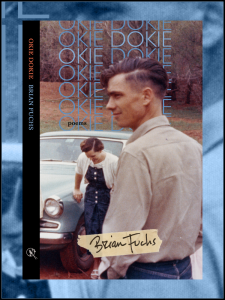
It’s finally out.  And I can finally get some sleep!  Here are the links to my book on Amazon.  I think it looks so much better in paperback, but there is a Kindle version available.

Amazon Paperback

Amazon Kindle

If you don’t already know what’s up, here’s a little backstory.  I’ve been writing since I was a child.  My first poem that I remember was written in October 1988 when I was 9 years old.  When I was 12, my teacher accused me of plagiarism because she didn’t think a child could write.  I don’t say that to congratulate myself at all.  I’m not even sure if that was worth all the aggravation.  It has been lost to time.  It was titled Paige and it was about the life of a woman who never finds happiness.  But I imagine the actual poem would seem completely juvenile now.

I started writing in earnest in college and since 1997 I have written consistently.  While I veer off into other projects, like short stories or novels, I find poetry that I always return to poetry and enjoy writing it.  Over the years, I’ve developed my own style.  That is a good thing.  The problem is that I also haven’t had serious critique of my work since I graduated from college, so I don’t actually know how my work is seen by others.  I’m amazed that I’ve managed to spend the better part of 20 years unwilling to share my work for fear of rejection.  And I really should have managed that sooner!

When I lost Mom last year, the first thing I did was crawled into a metaphorical hole for 9 months.  I wanted to disappear because I didn’t understand how one can live without his mama, and I’m not too proud to say it.  It also brought a few things into focus.  One of those things was letting go of the expectations and opinions of others.  Now, I mean of me as a person, not my work.  That is a lesson that has been taught to me my entire life, but sometimes things need to cook for a while.

So, now I’ve got a book.  I worked diligently over the summer to get it done.  My garden is sad and neglected, my roommate is sad and neglected, and my family… well, they are too busy to have noticed, but if they had I imagine they would feel sad and neglected.  For this first collection of poems (because I don’t want it to be the last!), I wanted to focus on a few things: 1. Poems with very specific references to people.  It’s not that I won’t write that way in the future, but I wanted to give people the words I had written for them before getting into other subjects.  2. Epitaphs.  I’ve lost a lot of people and I often have things to say about that.  I’d like to get through a lot of those I’ve had lying around, but there are many more.  3. My very favorite poems I’ve written… that aren’t too scandalous.  I get it, family will buy this first book. They will even hang on for a second, but by the third they won’t be too fussed about it.  So, I have actually created a plan where my third book is where I completely let my hair down.  That does mean I have to do at least 2 more books, but it also sounds like I’m censoring myself.  In a way I am, but I’m not completely either.  I want my prudish great aunt to be able to have something she will never read, but that won’t make her blush too much if she decides to open it up.

Last thing I will say about it, I decided to make notes on each poem.  Rather than include them in the actual printed book, they can be found here… in the writing tab, or at this link.Continue Reading
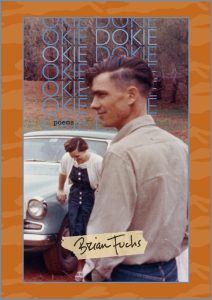

Gleditsia triacanthos

for a friend

You were beautiful once, and maybe you still are.
I rarely revisit those moments when we became adults
on Sunday mornings, skipping church for each other.
I don’t think about the length of your neck
and I don’t dwell on the smell of you skin.
I’ve turned you upside down, exposed the roots
and tried to understand how they worked,
rubbing the soil into the grooves of my skin.
I don’t want to return to your kindness or cruelty,
and I don’t want to put you back how I found you;
Your branches are thorny and I’d end up hurt again.
So, I’ll repaint the photos I have of you in new colors
and we can pretend that there were no feelings.
And I’ll send you copies of the new versions
and you can pretend that you don’t remember.

Notes

Written 18 September 2019 in Payne County, Oklahoma.

Brian Fuchs, “Gleditsia triacanthos” from Okie Dokie (Scissortail Press, 2019)

Daucus carota

for Angela

We came together
to write new chapters
and to tell stories,
if only to ourselves.
Some were writing voluminous sagas,
spending time in cabins
they hoped to translate
like a Boris Pasternak
of Alaska’s near-wilderness.
Others wrote their memoirs,
revealing to us all
just how cold snow can feel
to a Samoan family.
We’d laugh at how ridiculous it all seemed,
and at ourselves because we
are all ridiculous and cold.
I worked on new lines of verse,
wrapped up in myself,
observing and reserved.
We were all doing our part,
all trying to be interesting.
Angela would arrive with carrots,
small globes pulled from her own garden,
and some tea from her travels.
Or beets,
pomelos.
The pomelos she’d purchased
at a grocery store because oranges
and grapefuit
are too ordinary.
They invite no questions.
Her story would transport us
to the places in other states and countries
where she had enjoyed a meal,
or to the soil of her garden,
bursting with vegetables.
And we’d talk about gardening
and the carrots
and hunting.
I would watch her face,
framed with a desire
to be accepted,
to be loved,
appreciated for her carrots and pomelos.
My life would hang there,
uninteresting
and I wouldn’t talk about that with her.
I thought about other Angelas
of my past.
They didn’t share beets with me,
and their offices didn’t have
the sweet aroma of a teahouse,
cinnamon, clove, raspberry,
vanilla, soil.
I wonder about the bonfires
I never attended.
The discarded wood,
the friends and beer.
Was Angela there,
bunch of carrots in hand?
I can see her with the glow on her face
from the brilliant fire,
reflections of children or dogs in her eyes,
smiling because she is happy,
always happy.
What about Faydra?
She has surely lit a few fires
in her solitude.
I wonder how brilliant
the fires used to be for her,
I wonder how dull the fires seem now.
Oh, Faydra!
Faydra
Faydra
I wonder if the carrots help
on the days when things
start to collapse.
I worry about the darkness,
understand it.
When our stories are all written,
will we understand the languages
in which they’ve been written?
I find my own language so difficult,
and I worry about understanding
the bonfires we all set for ourselves,
the interest we take in pomelos,
carrots, cabins, the sun, or
which tea goes best
with happiness.

Written 17 September 2019 in Payne County, Oklahoma

Brian Fuchs, “Daucus carota” from Okie Dokie (Scissortail Press, 2019)

Okie Dokie

We were so young
our crayon-drawn dreams
still hung on refrigerators
My eyes were bright then
my mind full of possibility
We encouraged each other
skipping toward happy futures
we never considered not reaching
I got stuck in moments of youth
flailing my arms and hollering out
for them to turn around
and pull me along
Alrighty-roo, kangaroo
they’d say, but they didn’t stop

Jeff wrote books to impress Molly
Molly baked cakes to impress Jeff
together they placed a star in the sky
for me to look at and be impressed
I was
I tugged at my legs
eager to join the fun
but my legs never move
when I need them
I took out binoculars
looked into the distance at my friends
awards now pinned to their chests
and medals hung around their necks
I wanted awards
I pulled out a bullhorn
called on them to stop
to share the awards with me
and show me the shiny medals
Yipper-skipper, li’l dipper
they’d say, but they didn’t stop

The sky ahead filled with stars
and I was truly impressed
They were meandering and singing
One sang his songs in French
hanging his fancy French star in the sky
It was fancy and impressive and French
Others sang songs about babies
those songs always out of tune
My friends became tiny specks
in the distance, no larger than the stars
songs fading as they went
I was impressed by how far ahead they were
and I stopped struggling
with no chance to catch up
When I had stopped, my feet could finally move
I finally ran forward in the direction of my friends
So, okie dokie, artichokie
I’ll say and I won’t stop

I’ll go read poems by Jennie Lloyd
or some rather poetic obituaries
and I’ll think about the faces
I’ve left in the past
left stuck in the moments of their youth
And maybe Jennie will notice
and show me the path she traveled
warn me about the potholes
She sing me her own song and I’ll love them
humming those songs to myself years later
Maybe I’ll catch up to friends I’ve forgotten
or meet new friends on the path
who have been running toward dreams
we can share with each other
dreams still written on treasured papers
in crayon on refrigerators
I’ll be sure to place my own star in the sky
a bright light to impress the ones still stuck
and when I’m just a speck in the distance
all I’ll think about how all the boys
who never kissed me

Notes

Written 17 September 2019 in Payne County, Oklahoma

Brian Fuchs, “Okie Dokie” from Okie Dokie (Scissortail Press, 2019)

Pieces of Dissected Butterflies

I left Tulsa when my friends had died
and we were all set adrift, angry and lost,
wondering if staying meant more of us would die.
I tried to go to Dallas, to a life I wanted.
They boys swarm thickly there,
and I still wonder if my days would have been
spent in the beds of strangers if I’d gone there.
I’ve always longed for the beds of strangers,
to feel taken for granted and awkward.

In moving, I detoured, finding myself in Anchorage,
near the place where my dad spent his youth,
carried on winds I rode for too long, or just long enough.
I was not qualified for life in Alaska,
not qualified for the men who had gone there.
But I was determined to find myself,
or to find Dad in the places where his friends still lived.
His youth was left in an Alaska that no longer exists,
so my mind found new reasons to keep me there.

I found the spaces I understood,
the pockets of the city that seemed familiar,
bookstores filled with other refugees,
of lives that had started to drift.
My mind invented the things I didn’t know
and the people around me became gods.
I didn’t question that, and I formed a religion.
Their lives were spent being perfect
in ways I could never spend my own life.
They are still gods; I pray to them in darkness,
my soul crying out to be acknowledged.

On cold mornings, I liked to price books,
scanning their barcodes and attaching a sticker.
I would think about my friends,
wonder about the shapes of their bodies,
and worry that they could hear my thoughts.
I’d worry that I was saying the thoughts aloud,
and I’d wait for Kevin to go upstairs to inject his insulin
so I could stop thinking about his waist.
I’m still thinking about his waist.
The decade I’ve had to reflect has made me more curious
and sometimes I worry that he can still hear my thoughts.

I have been dissecting butterflies,
stained glass wings pulled apart
by unwieldy spinning steel fingers
as I think about beauty and conformity,
praying to my gods, mindlessly offering
the insects as a tribute.
I didn’t intend this massacre
and in the lawn lie the tiny lifeless parts.
In the hot sun of the places of my youth,
I don’t have new shapes to fill my mind,
new boys to think about.
I dwell on the boys of my past.

I’m reaching back, feeling myself grasping
for people I can’t always recognize,
the names apparitions in my mind.
Some of the gods’ faces have merged & morphed.
I’m taking the ones I wanted the most,
or the ones I wanted to be the most,
and placing their pieces where I can sort them
and try to hold onto them in my mind.
I’m still thinking about waists and hips and shoulders,
still wondering about the firmness of skin.

They haven’t seen me wondering,
their lives have pulled them toward much happier places,
some growing beautifully in Alaska,
others found scattered by the winds
that had first deposited them near me.
The butterflies are whispering secrets,
understandably warning each other about me.
In new cities and states, in their new lives,
they think about the times we spent together
and I go on thinking about their bodies.

Notes

Written 12 September 2019 in Payne County, Oklahoma.

Brian Fuchs, “Pieces of Dissected Butterflies” from Okie Dokie (Scissortail Press, 2019)Continue Reading

The Ravens Became Crows

I stood two feet away, a witness to the moment
when Alaska started to fade away,
revealing the familiar loneliness of Iowa.
I stood close enough to touch her,
unable to find my arms, unable to find words.
I looked at the harsh black words,
old marker on a scrap of paper, trash.
MY DAD IS DYING
I stood, paralyzed, my body slipping further away,
unable to clear the tears from her eyes,
unable to pull time back and change these events.
She looked at me, and in her eyes I could see
her snow melting, revealing fields of corn.
I could see her ravens becoming crows,
and we shared a silent moment,
knew everything would change.
I stood still for what must have been days,
and when I finally moved my feet, Lisa was gone.

Notes

Written 7 September 2019 in Payne County, Oklahoma.

Brian Fuchs, “The Ravens Became Crows” from Okie Dokie (Scissortail Press, 2019)

Duncan, Oklahoma

His fingers skip over piano keys,
his eyes close to take in the moment
or to imagine me more handsome.
He takes me to a dark restaurant
and I preoccupy my mind with
the notion that he is trying to hide me,
ashamed that he has made such an error.
I cannot enjoy the food or the conversation,
worried about returning to his house,
which he keeps too clean.
Why is it so clean?
Does he see me?
Does he know what I’m thinking?
The music he played seemed sad
when I thought about it later,
sitting in a car still scented with newness.
Am I messing this up? What is this?
The car is too clean and I don’t know
where to put my words.
He’s speaking with an accent of anticipation,
using phrases that clarify his disappointment
to me, even though I am not listening.
His eyes were closed as he played the piano.
Was he thinking about how much he wanted me?
Was he thinking about older men? Younger?
I don’t know how to be what he was expecting; I try.
I talk about my youth, my immaturity,
the words exposing the distance between us.
He’s thirty-six years old, twice my age.
We return to the sterile house, the gaps widening.
I stay, unclear why I have come here.
The night is uncomfortably quiet and cold,
I sleep in his house, in a guest room.
I drive three hours back to my own home in the morning,
back to a house that is never clean,
back to a life that isn’t filled with unspoken longing.
For weeks, the emails stop. I was not enough,
I didn’t know how to be enough,
did not understand what enough meant.
I regret being me when I arrived at his house,
convince myself that I have orchestrated a deceit.
He plays his piano at home alone, he closes his eyes
and thinks only about the music.

Notes

Written 1 October 2018 in Payne County, Oklahoma.

Brian Fuchs, “Duncan, Oklahoma” from Okie Dokie (Scissortail Press, 2019)