
Managing Expectations
 I have never been very much into gardening. I love having things growing around me, but the process of actually putting those things in the ground and taking care of them… no. But I’ve found myself with a lot of need for distraction lately. So, I have turned to gardening. In the heat. It;s keeping my brain occupied, but I also keep remembering something my brother talks about all the time: managing one’s expectations.
For years, I’ve watched my parents return from nurseries and garden centers with car loads of beautiful plants for the flowerbeds, but with no idea where they will go or who will plant them. Inevitably, most of the plants would end up underwatered, unplanted, neglected, or planted in the wrong spots. The whole ordeal that had started off as fun would end up a disappointment, and a source of frustration. The expectations did not meet the reality. The way they managed that was to try to change the reality around them, but that never worked. Brent’s point was always that it was the expectations that were the problem.
 I lived for many years in Alaska. I love the climate that promotes lots of beautiful growth, but with lots of shade and very little heat. I would love to have a garden full of cypress trees draped above head, ferns popping out along the bases of the trees, and fuchsias in hanging pots lining the porch. Moss would grown on the roof of the shed and everyday a light rain would keep the soils moist and the plants would grow up around me and there would be flowers in bloom all summer. I want a beautiful deck to enjoy the cool evenings and have people over. Unfortunately, that is not the situation I find myself in. If I was constantly trying to make that happen, I would spend a lot of my time disappointed and convinced that gardening doesn’t work. What I have to do is work within the framework available to me.
I want tall shade plants: Junipers and crapemyrtles are excellent plants that grown to 10-14 feet and provide a great amount of shade. They have the added benefit of attracting birds and butterflies. So, I am planning a landscape that depends on these two plants primarily as shade plants.
I want lots of flowers: Roses. Roses in Oklahoma, well in my part of Oklahoma, require little care and bloom almost all year. Climbing roses tied against the house give a nice shade to the inside and allow for the appreciation of blooms. I also cannot think of a flower that comes in a greater variety of shapes and sizes. I’ve had a lot of luck with roses, so I’ve popped them in strategically around the house.
I want plants growing on the ground that aren’t grasses: Grasses are a pretty common xeriscape option, especially as I live on the border of two grass prairies. I don’t care for them though. What I do love is vinca, or periwinkle. Vinca keeps my flowerbeds full of green leaves without having them be full of weeds and grasses. It also helps keep my soils moist, which the other plants appreciate.
Moss growing on the roof??? Okay, I admit this one is harder to substitute. So, I’ve decided to try Virginia Creeper. It does grow wild here, but usually deep in the wooded areas. If I can provide the right amount of moisture, I’m hoping I can get this creeping vine to grow up the side of the metal shed or vinyl siding on the house. This one is going to require more effort, and I plan to start it next Spring.
Daily rain? Now I’ve gone too far! Brent and I have talked a lot about irrigation systems. I’m going to invest in the right things so that next year I can have both irrigation and misting available around the house.
I want a new deck: My back porch is rotting. It’s time for it to go, and with Brent’s help I’d like to add on a ground level deck with steps down from the house. It’d be a nice place to spend evenings, as the back yard gets all the evening shade. That project is happening this fall.
When I look at my plans, they seems overly ambitious. I worry I’ve gone too far with what I want to do. Maybe I have. I’m trying to keep it simple, space out my work, and achieve something more than I have now. And I have probably set my expectations too high.
So, I’m not going to be creating a replica of the gardens of Versailles, and I won’t be building a living sculpture. There won’t be any sidewalks with flowers arched above to take a stroll through or fountains with flamingos. That’s okay. It doesn’t need to be outlandish to be beautiful. My plan will probably get pared down over time, or I will wait another year to complete parts of it. It will be mine, and that is what I’m excited about. I never really cared about gardening until I started getting my hands dirty. It’s fun to transform a landscape and to see the plants take shape over time.Continue Reading


 I personally think they should change it.
  The Great Seal of the United States, which can be seen on any one dollar bill, is beautiful. It features an eagle clutching an olive branch in one talon, arrows in the other talon, thirteen stars above the eagle’s head and a banner in its beak with the motto e pluribus unum written on it. The olives, leaves, stars, and arrows all number thirteen to honor the original colonies. The reverse features a pyramid with the Eye of Providence, featuring annuit cœptis written above and novus ordo seclorum written in a banner underneath. These symbols on our seal feel very american and very much a part of who we are. The flag, however, is not that. It has no motto written across it and the name of our country does not appear at the bottom to remind us of what it is for. We don’t need that reminder, and because the flag is so simple, and fantastically so, neither does anyone else.




 I’ve been thinking about the concept of ‘home’ for a while now. What is it that give our spaces that feeling that makes us feel good being there. It isn’t uncommon for an apartment to feel distinctly not homey, particularly ones first apartment after leaving the house where parents and siblings still reside. It makes tempting the idea that it is the people that make for a feeling of ‘home.’ But it seems equally common for an apartment to feel like the place where that person will spend the rest of their life. And that happens to folks who live alone. So, is it the people at all?
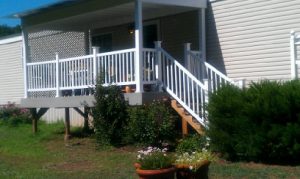 I love being with my family. There was always something about returning for a visit to my childhood home that had a fantastic mix of nostalgia, comfort, and distance. In 2005, I moved far enough away that visiting required planning and money; my visits to my hometown were reduced to about once every two years. By my first visit, my parents had sold my childhood home and moved to the country into a brand new manufactured home while they planned out their dream home. There was no way, I thought, to feel at home in a mobile home sat in the trees just outside of town.