The Ravens Became Crows

I stood two feet away, a witness to the moment
when Alaska started to fade away,
revealing the familiar loneliness of Iowa.
I stood close enough to touch her,
unable to find my arms, unable to find words.
I looked at the harsh black words,
old marker on a scrap of paper, trash.
MY DAD IS DYING
I stood, paralyzed, my body slipping further away,
unable to clear the tears from her eyes,
unable to pull time back and change these events.
She looked at me, and in her eyes I could see
her snow melting, revealing fields of corn.
I could see her ravens becoming crows,
and we shared a silent moment,
knew everything would change.
I stood still for what must have been days,
and when I finally moved my feet, Lisa was gone.

Notes

Written 7 September 2019 in Payne County, Oklahoma.

Brian Fuchs, “The Ravens Became Crows” from Okie Dokie (Scissortail Press, 2019)
The Rain

I’m still waiting outside for rain,
hoping for sudden downpours from cloudless skies.
I’m wondering if she’ll join me when the first drops
start to fall and the birds fall silent.
She’s been delayed, I’ve told myself again,
or the rain hasn’t been enough.
It has never been enough
I’ve summoned more and more rain,
for over a year I’ve coaxed it from the air,
the ground sometimes swelling, saturated and marshy.

Brush Creek has filled to overflowing,
washing out parts of the road and clearing out
the debris of our distractions.
It has not been enough.
The Cimarron & Arkansas Rivers have been flooded,
swallowing homes and memories,
lives lost and inconvenienced.
Still she has not arrived.
I continue my incantations, calling for more clouds,
more rain — great hurricanes that try to find me,
creeping along the coasts, tied to the oceans.
Florida, Georgia, Louisiana, The Bahamas, Puerto Rico,
they may all need to be sacrificed in my efforts,
and it will be worth the loss because I will
no longer feel like I am alone.
I am listening for those first signs, the drips on the tin roof
and I am ready to throw open the windows,
clench my fists, and try to push my dreams into reality.
I know she will join me if I keep trying,
and we will sit together on the covered porch,
resuming what should still be.

Notes

Written 5 September 2019 in Payne County, Oklahoma.

Brian Fuchs, “The Rain” from Okie Dokie (Scissortail Press, 2019)Continue Reading

Cercis canadensis

for Dad

When we had tried
putting ourselves together again
we’d used the wrong parts,
made effigies of ourselves
with the piles of distorted junk,
left behind scraps of a once-full life.
We went through the motions of people
spoke like them, practicing their accents,
but did not understand our own words.
We got the phrases wrong,
the tones, the memories.
Periodically, we’d erupt into full color
flowers growing from every part
and our days seemed alive with joy.
But we would catch ourselves lost in time,
eyes fixed on a long-abandoned walker,
a long-absent bed,
a long-neglected garden,
at the things we find so important now
and the flowers would fall from our bodies.
I gave up on trying to find the parts
of myself I missed most,
stopped looking for who I had been before. I’ve been more comfortable with discomfort,
waiting for others to finally leave the safety
of their beds, the safety of their tears.
And we’ve started to share ourselves again,
imagining Spring, redbuds flushed fuchsia,
grief removed from our shoulders,
sadness washed from our faces
by the showers of April and storms of May.
We will remember how to be happy
and how to be sad and how to be,
and we’ll see the long-forgotten remnants
and we will understand who we are.

Notes

Written 19 April 2019 in Payne County, Oklahoma. Rewritten 5 September 2019 in Payne County, Oklahoma.

Brian Fuchs, “Cercis canadensis” from Okie Dokie (Scissortail Press, 2019)Continue Reading

Duncan, Oklahoma

His fingers skip over piano keys,
his eyes close to take in the moment
or to imagine me more handsome.
He takes me to a dark restaurant
and I preoccupy my mind with
the notion that he is trying to hide me,
ashamed that he has made such an error.
I cannot enjoy the food or the conversation,
worried about returning to his house,
which he keeps too clean.
Why is it so clean?
Does he see me?
Does he know what I’m thinking?
The music he played seemed sad
when I thought about it later,
sitting in a car still scented with newness.
Am I messing this up? What is this?
The car is too clean and I don’t know
where to put my words.
He’s speaking with an accent of anticipation,
using phrases that clarify his disappointment
to me, even though I am not listening.
His eyes were closed as he played the piano.
Was he thinking about how much he wanted me?
Was he thinking about older men? Younger?
I don’t know how to be what he was expecting; I try.
I talk about my youth, my immaturity,
the words exposing the distance between us.
He’s thirty-six years old, twice my age.
We return to the sterile house, the gaps widening.
I stay, unclear why I have come here.
The night is uncomfortably quiet and cold,
I sleep in his house, in a guest room.
I drive three hours back to my own home in the morning,
back to a house that is never clean,
back to a life that isn’t filled with unspoken longing.
For weeks, the emails stop. I was not enough,
I didn’t know how to be enough,
did not understand what enough meant.
I regret being me when I arrived at his house,
convince myself that I have orchestrated a deceit.
He plays his piano at home alone, he closes his eyes
and thinks only about the music.

Notes

Written 1 October 2018 in Payne County, Oklahoma.

Brian Fuchs, “Duncan, Oklahoma” from Okie Dokie (Scissortail Press, 2019)
David Eugene, look at me when I’m thinking about you!

I’m a disciple, a child of your narcissism.
an inadequate acolyte of your worst impulses,
treasonous and suspicious, even in my reverence.
Love is wrapped in sarcasm, in mocking and making-fun.
I pray these are truths, and that you are as transparent as you seem.

I only see the Davids for who they are,
blind to who they want me to see, who they wish they were.
I only see you for who you are,
but I feel the person you want me to be
growing cynically inside.
Oh David, do you not recognize the idolatry in my loyalty?
Does my face not give away my desire to be looking at my own face
when I am looking at you?

The tears stay close, pooling in eyelids, fighting their impulse
to race down my cheek toward knowing I am fully myself,
and not who I am trying to be.
I am trying to be bold in the ways you expect,
no longer cowering in the corners where you found me.
I remember the safety of home, and the emptiness.
I felt safe in my denial, but I am liberated by your sacred teachings.

I grovel, prostrate myself before you,
foolishly and joyously feeding your need for attention.
David, you have shown me that you are more important than I am.
You are more than I am. You are existence.
I meant to steal the hearts of those around you,
meant to show them how much I had learned at your feet.
They exist, you exist, and I have revealed myself to be fragments.
You have reassured me, patted my head like a Lhasa apso,
my head cocked to one side as I attentively await praise.

Oh David, I have not been enough!
The fragments have betrayed me and revealed that I am not whole.
I’ve tried holding them together with glues and tape,
but the picture never seems real;
the other congregants have moved on, my failings insurmountable.
They have found me lacking and are uncomfortable in my presence.
Selfishness is a difficult lesson to learn; I am trying.

I’m still dwelling on my heartache, trying to release it,
unchaining my tongue and allowing bravery to escape,
to become the person I see in you, David,
or to at least to become someone whole, beautiful and brazen,
someone rewarded with love, sex, warmth.
I humbly bow, giving thanks for even a chance
to be blessed by your acceptance.

Notes

Brian Fuchs, “David Eugene, look at me when I’m thinking about you” from Okie Dokie (Scissortail Press, 2019)

Written 17 March 2008 in Anchorage, Alaska & 7 September 2018 in Payne County, Oklahoma.Continue Reading

Luctus Herbarium

I’m counting the blooms,
tagging and cataloguing each one,
memorializing the specimens in photos.
I’m waiting for patterns,
counting petals and leaves to make sense of the passing months.
Routines form in my distractions, order.
This must be a sign.
On hot days like this, I sit in the heat,
water hose set to mist.
I watch the tiny drops of water float by,
dancing in the shifting breeze
while I clutch the trigger tightly.
I switch the settings,
long streams shoot into the sky,
pattering like hard rain on the metal roof of the porch.
I pulse the trigger,
tight, loose, tight, loose.
I’m wet from the water dripping down my arm,
and by the drifts of mist.
The hot sun dries my clothes,
nozzle retired to the floor of the porch.
Thoreau wanted to live simply and deliberately,
to test himself against nature,
to love it, to record it, tame it or be tamed by it.
I just want to get through the day,
to bury my head in my collection of information.
I can’t index my life in values and harvests;
my gardens are not for sale,
nor are they planted with very useful.
Maybe they should be.
Maybe…
Soon I’m returning to my work,
counting the dead blooms as I prune
and noting which ones wilted first.
So many flowers remain beautiful without petals;
that seems important enough to note, so I do.
I’m still slightly damp,
enough to forget about Mom’s absence,
but she is even more present
in the sorted flora, the journals of growth,
in the fountains of sun-warmed water.

26 August 2018

Written 26 August 2018 in Payne County, Oklahoma.
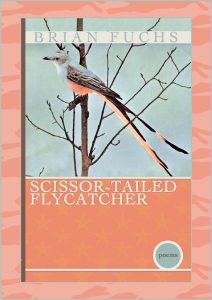
Brian Fuchs, “Luctus Herbarium” from Scissor-tailed Flycatcher (Scissortail Press, 2020)

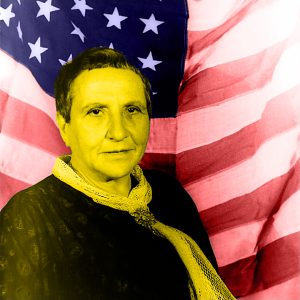
Gertrude Stein (1874-1946)

A few days ago, while organizing paperwork and whatnot, I came across my writing journals from college.  It’s interesting to revisit oneself after 20 years.  It felt familiar, but not so much that I recognized the author.  I could remember writing the words, but the fact that I had done so struck me as bizarre.  For the most part, I didn’t like the person who had written those poems and fragments and notes.  He seemed silly, immature, and at times overly serious.  I wish I could go back and tell him the things I have learned on my journey.

That said, I haven’t been writing much lately.  I haven’t even journaled this summer for obvious reasons.  But I’m very much feeling the words gathering into lines in my head, and I am eager to write more poetry.  I’d been in a dry spell on poetry, but mostly that was due to the lack of quiet I had been dealing with.  Quiet seems easier to achieve recently.  That should help.

When I was studying literature, it was easy to fall for specific authors who I just connected with.  It wasn’t always clear why those connections happened, but it was this that introduced me to Galway Kinnell, Sylvia Plath, Frank O’Hara, Geoffrey Chaucer, & Tim O’Brien.  I latched on to these, and to others, quickly and they helped guide the type of writer I would be.  I was also discovering contemporary authors at that time in my life and their words would guide me as well — Jim Grimsley, Bob Smith, Gary Reed.  Gertrude Stein was one of the authors I discovered in class, having been aware of her for most of my life.  It’s odd how little one can know about someone who has such a well-known name.

Gertrude Stein wrote in several different styles, but all of it was filled with her characteristic repetition and rhythm.  I was especially interested in added that to my own work, and I gave it a try many times.  It’s something that still comes up.  A nod to Stein is a very common practice for me, and I thank her for being one of my muses.Continue Reading