I’ve been listening to a lot of Christmas music, especially in the car.  I love it.  I look forward to the switch to all every year, and like everyone, I have some favorites I’m excited to hear.

“The inexpressible depth of music, so easy to understand and yet so inexplicable, is due to the fact that it reproduces all the emotions of our innermost being, but entirely without reality and remote from its pain…Music expresses only the quintessence of life and of its events, never these themselves.” ― Oliver Sacks, Musicophilia: Tales of Music and the Brain

So many Christmas songs have an ability to move me in ways that other types of music lack.  Maybe that is just because they are played annually and often during the season.  Maybe it is just that the holiday season is full of activity, and that gives these songs special meaning.  There are a handful of songs that make me think of the smell of the Santa bag we had at our house one year.  Another group transports me to my grandparents’ house on a December evening, the tree glowing intensely red.

I’ve made a “Top 15” list here, which was pretty hard.  There are so many I love.  A week from now, this list could be a completely different one too.  At the time of writing this, these are my favorite Christmas songs.Continue Reading

My History with Vegetarianism and Veganism

As long as I can remember, I’ve had a strained relationship with food.  I don’t have many food memories stored up, but I remember loving pizza, fruit, cereal, and burgers.  I started gaining weight in 3rd or 4th grade.  It wasn’t so much that I craved food, but that I was eating junk.  I had no idea how to eat properly, and enjoyed chips and candy frequently. By 7th grade, I had repeated stomach problems so severe that I was taken to a doctor who told me to not eat red meat or fried foods.  Ever.  My stomach issues cleared up.  I was able to mostly eliminate red meat and no longer ate fried foods.  My diet was not actually improved; I was only doing the minimum required to not be in pain.  The candies, sodas, and other foods continued.

When I was in middle school I became friends with a kid from a family that was vegan.  He also didn’t eat wheat, salt, or sugar.  Eating at his house felt like being in a different country, and my parents certainly didn’t know how to feed him at our house.  Things were always awkward between him and most other people.  A lot of ridicule was thrown his way, and behind his back he was referred to pejoratively as “veggie boy.”   I defended him, but in my mind the family’s vegan lifestyle was akin to a minority religion.  He was always thin and short, traits that were attributed to his diet.  Vegetarianism and veganism were seem as extreme in Oklahoma culture.  The official state meal, adopted in 1988, consists of fried okra, cornbread, barbecue pork, squash, biscuits, sausage and gravy, grits, corn, strawberries, chicked fried steak, pecan pie, and black-eyed peas.  While one could make a strong argument for at least part of this being designated “Oklahoma Historical State Meal,”  as a current meal it definitely marginalizes plant-based lifestyles.

I started to form my own opinions on eating meat when I was in high school.  Veganism didn’t seem right, or healthy.  My friend seemed to be malnourished, so I made the assumptions everyone else had made.  Still, the idea of eating animals seemed increasingly in conflict with my love of animals.  Love of animals is a misunderstood term, and one that has been a part of who I am for most of my life.  I liked to read about animal behavior in encyclopedias, National Geographic magazines, and in my subscriptions to National and International Wildlife magazines.  I was hooked on natural history and plastered the walls of my bedroom with images from magazines of the animals I liked the most — cats, insects, giraffes, gorillas, dolphins, peacocks, dinosaurs, and many others.  I was starting to see them as fellow inhabitants of the same planet and that belief made it harder and harder to want to see parts of animals cooked up for me to consume.  I wasn’t making a full connection.  It’s easy to forget what the thin round brown disc on a burger actually is.  It’s almost designed to prevent knowing.  I would go back and forth on my willingness to eat animals for a few years.  I found it easier in college; the student union offered a veggie patty that I could have with my Josta soda and I could get a bean burrito or veggie sub for dinner.  Feeding myself allowed me to eschew the animal foods that were generally consumed by other family members.  I still wasn’t terribly strict with myself, allowing myself to enjoy the McDonald’s where my roommate worked.

I drifted away from these values after college.  I have always been an eager people pleaser, and when I started spending time with a group of new friends, I didn’t want to seem odd.  Enjoying the meats they cooked allowed me to fit in better.  I would still try to be mostly plant-based, but did not turn down animal meals either.  I still had issues with eating the animals, but I was more than willing to trade in my personal beliefs to make sure my friends were comfortable.  It’s the only way in which I feel Southern.

Honoring My Values

In 2005, I took an opportunity from my dad to visit Alaska.  He had grown up there and I was eager to see it.  I was working on a novel based on his life at the time, so it seemed logical that I should go see where it all began.  A friend went with me for the first week and I would stay a full month.  My dad had found two places for me to stay, both at the homes of high school friends of his.  At the end of the first week, I had decided I was moving, and my friend was eager to join me.  She returned and orchestrated the move while I continued to stay and look for a job.  The second two weeks of my vacation were spent housesitting for a couple who are vagan.  Even with my history, I found it off-putting.  I would go through their pantry and cabinets looking at all the unusual foods.  It was not what I was used to.  And I didn’t fully embrace the experience, as I should have.  I took pleasure in buying fried chicken and eating it in the living room, a secret act of defiance.  I’m still sad about that situation.Continue Reading

I watched a TED talk by Roman Mars, the man behind the 99% Invisible blog.  It was on the subject of city flags and I didn’t expect much from it; it had come up on YouTube’s autoplay after a video I had chosen to watch.  I was eating dinner, so I just let it go.  I was immediately hooked and by the end I found myself googling flags for cities where I’ve lived to see how bad they are.  And mostly, they are pretty bad.  I couldn’t get it off my mind, so I went to Photoshop and started to make my own.  As Mars points out in his talk, people are passionate about the flag for the city where they live, and people are usually pretty terrible when it comes to great design.

The loudest voices tend to not understand why a flag like the Union Jack, for example,  is so important for the identity of the United Kingdom.  This was apparent during last year’s call for a change to the city flag of Provo, Utah.  It had long been considered one of the worst, but the proposed change caused controversy.  When opened up to the public, the types of submissions received largely failed to follow the basic principles of design, opting instead to put in some sort of agenda for the city.  Flags are unifying, not political.  In the end, Provo voted for and chose a fantastic new flag, one other cities should be envious of.  But it was an uphill battle, which is somewhat surprising… or should be.


New Zealand is in the midst of a second referendum to change their country’s flag to something divorced from their Australian neighbors.  It was bound to be controversial; the current flag was adopted in 1902.  It seems, however, that the issue is more about people not really caring, and opting to vote for the status quo as a way of making that point.  But the prime minister has a point.  The current flag is nearly identical to Australia’s flag, and like it still has the Union Jack on it.  While New Zealand is a part of the Commonwealth, most countries within it have modified their flags following independence in the 1930s and 1940s.  Canada’s fantastic flag is a great example.  The Union Jack persisted on the flag for a while, but by the mid-1960s, the maple leaf flag had been adopted, cementing a true identity for Canadians, removed from that of the people of the United Kingdom.  They do share a queen, but they do not share a cultural identity.  Their flag drives that point and gives the separate peoples something to make them special.  As for New Zealand, they may choose to keep their current flag. I personally think they should change it.  The proposed change, chosen in a vote last year, is pretty great.  I would’ve gone further and removed the stars, but it’s still a great looking flag.

Looking at state city flags in the United States, I found a strong tendency to stick the state or city seal in a field of color, usually blue, and call that a flag.  And that looks stupid 100% of the time.  A seal can be a beautiful piece of art, incorporating a surprising amount of history into a (usually) circular emblem.  A flag, however, is not a history of one’s city.  It is a symbolic representation of the city.  It’s an icon, a place reduced to the simplest form possible.  The United States flag is another great example of a former British Colonial flag that came into its own with the removal of the Union Jack.  The thirteen colonies had a flag, similar to the current United States flag, but instead of stars there was the Union Jack.  Changing that portion to a field of blue with a star for each state not only changed the meaning of the flag, but it retained its sense of history.  It acknowledges where we came from, but makes clear that we are no longer a part of the British Empire.

The Great Seal of the United States, which can be seen on any one dollar bill, is beautiful.  It features an eagle clutching an olive branch in one talon, arrows in the other talon, thirteen stars above the eagle’s head and a banner in its beak with the motto e pluribus unum written on it.  The olives, leaves, stars, and arrows all number thirteen to honor the original colonies.  The reverse features a pyramid with the Eye of Providence, featuring annuit cœptis written above and novus ordo seclorum written in a banner underneath.  These symbols on our seal feel very american and very much a part of who we are.  The flag, however, is not that.  It has no motto written across it and the name of our country does not appear at the bottom to remind us of what it is for.  We don’t need that reminder, and because the flag is so simple, and fantastically so, neither does anyone else.
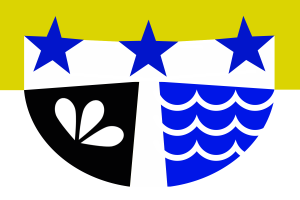
One of my favorite city seals is that of Tulsa, Oklahoma.  It’s a really lovelypiece that must look great on letterhead, on business cards, and affixed to the city’s buildings.  It says a lot about the city in a small space.  But the city’s flag is exactly that seal in the middle of a white flag.  It gets lost.  It has no power there and just fails to generate the power it should as a symbol of a city.  I’ve created my own, one I think that honors the city’s seal while becoming more of a symbol that could be adapted in a lot of ways,  making way for a unifier for a city.  It could be something one is proud to put on a bumper sticker or a a patch on a backpack.  Business could use parts of it to mark themselves as local.  It does, in my opinion, the things a flag should do.

It surprised me how much I cared about flags.  Roman mars had started his TED talk with the assertion that 100% of people care about flags.  I raised an eyebrow at that. I did not think I did care about flag all that much, but I really do.  And I think others do as well.  But I do think it’s harder than people think to create a great flag for a city. It would be nice for these flags to change and a symbol of pride become available for cities whose flags just don’t work.

I haven’t picked on Oklahoma’s state flag much.  The state flag of my state is nice, and the official version from 1925 to 1941 was fantastic.  “OKLAHOMA” was added to the flag in 1941, which was unnecessary.  Supposedly, it was done as a literacy statement, but I’m not really sure how the name of one’s state on a flag truly promotes literacy.  At this point, the lettering could go.  Nobody would confuse the flag with another state’s.  I might also stylize the elements a bit.  I was able to draw the flag when I was a kid, but I remember it being overly intricate.

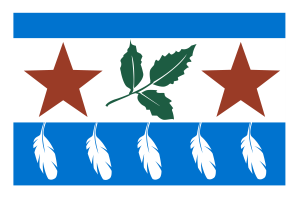
While I was tackling Tulsa’s flag, I made a whole bunch of flags.  Some of them are for communities that are small enough that they have never had a flag of their own, some are redesigns.  One is even for a community that doesn’t have residents year-round.  All were thought through, giving consideration to the various specifics of the town or city.  And I couldn’t help myself – I made some for fantasy places too.  Let me know what you think.

SaveSave

I want to comment on my journals I kept when I was a child.  This came about as the 20th anniversary of my trip to France approaches and I would really like to update my thoughts and give some back story.  I was 16 at the time of the trip, an age during which I felt extremely self conscious.  Although I expected my journal to remain private, I still left out things I didn’t want others to know.  I wish I could take that trip again.Continue Reading

Looking over my past work reminds me of how much I love creating and have greatly missed being able to work the way I’d like.  I’m getting closer to having more space, which will be nice and I hope to have a permanent solution within the next year that will give me both a lot of space and less chaos in my house.

Getting back to my work feels different this time.  I’ve had a lot of time to consider where I am headed, but I don’t know that I arrived at an answer.  I know where I see myself, but it just doesn’t feel as real as I would like.  Maybe I’m just letting fear do my speaking for me.  There certainly isn’t any reason why I cannot achieve those things I dream about.  And there is certainly no reason my art couldn’t propel me into where I want to be.  When I am open to it, I love my art.

On that note, it is amazing how much my art reflects what is going on in my life.  Over last summer, when life seemed really relaxed, I was able to create very easily and had a lot of fun.  Over the past couple of months, on the other hand, my drawings seem off and I haven’t picked up a paint brush since December.  I don’t feel inspired.  I feel claustrophobic, stuck, pushed down.  And that is easily explained.  I started feeling odd December 15, which developed quickly into the flu, which lasted for a couple of weeks and then turned into pneumonia.  I’ve technically been well for a month now, but I’m still coughing things up, and I have yet to feel as energetic as I did early in December.  It’s so hard to stay positive through that.  Meanwhile, I’m trying to coordinate new flooring in my house.  The boxes of flooring are waiting on my porch and I have to move as much as possible from the house into the shed.

I don’t mean to complain.  I don’t like complaining.  My point is that I’ve just been in such a non-creative headspace.  I am looking forward to a year full of art, life, and family.  I want it to be a productive and successful year.  I’m looking at 2016 as the year that prepares my life to make sense.  2017 is looking like a year when I can just relax.  I’ve been in a state of flux and upheaval for 3 years now.  Settling down is going to be amazing.

I’m interested in so many things that I hope to add to my website.  I’m looking into hand painting plates and glasses, various types of collage, painting canvases, having cards printed, and making ornaments for Christmas.  I’m also super-obsessed with all things fairy garden, but I’m terrible with plants.  I’m brainstorming a way to use the concept of the fairy garden/house to make something more “Brian” in nature.  A few years ago, I made these caged fairy animals as gifts.  That was fairy similar, but I think I can take this idea a little further.  There is just so much to think about and so much to do.  I hope you enjoy this blog.  Feel free to message me with things you’d like me to write about or any suggestions on art to try.

I’ve been thinking about the concept of ‘home’ for a while now.  What is it that give our spaces that feeling that makes us feel good being there.  It isn’t uncommon for an apartment to feel distinctly not homey, particularly ones first apartment after leaving the house where parents and siblings still reside.  It makes tempting the idea that it is the people that make for a feeling of ‘home.’  But it seems equally common for an apartment to feel like the place where that person will spend the rest of their life.  And that happens to folks who live alone.  So, is it the people at all?

I love being with my family.  There was always something about returning for a visit to my childhood home that had a fantastic mix of nostalgia, comfort, and distance.  In 2005, I moved far enough away that visiting required planning and money; my visits to my hometown were reduced to about once every two years.  By my first visit, my parents had sold my childhood home and moved to the country into a brand new manufactured home while they planned out their dream home.  There was no way, I thought, to feel at home in a mobile home sat in the trees just outside of town.

I was wrong.  While it wasn’t the same, the feeling was.  I was in a house that had only even existed for about a year, but it was filled with familiar furniture and my parents.  For me, that ruled out the structure and the location.  What seemed to be at play was the combination of the people, the memories I carried with me, and the stuff in the house.  Had my parents simultaneously discovered their mutual love for Victorian furnishings, throwing out the carefully cultivated collection of things in the house, I think the space would have felt as cold as I expected it to.  These objects brought with them the stories that define us as a family.

“I always want objects in my home that have a connection to me or something I’ve loved.  It’s still stuff, but it’s stuff that has meaning.” Nate Berkus makes a great point, and one I’d like to explore in depth for myself.  When I had one of those cold apartments, just out of high school, it was filled with items I can barely remember, mass produced and cheap things.  The only items I even clearly recall are items that had a story, even if the item wasn’t old.  The dresser my dad painted for me for my new place, the sofa he reupholstered, and that is about it.  It would take me years to collect items of meaning, to be given things once belonging to grandparents and parents, and to have the maturity to honor those things and treat them with the respect they had earned.

Six months ago, I moved into the mobile home where my parents spent years hoping to build their dream home.  They settled into their new house over the summer, leaving vacant a space that had surprised me, on a land that is peaceful and beautiful.  I’m honored to live here in this space that has become a part of the story, where my nephews spent so much of their childhood, where birthdays were celebrated, where holidays with family were enjoyed, and where my parents lived and loved and convalesced.

Many of the stories are lost; it had been incumbent on me to ask the necessary questions and carry on the mythologies and lessons of my family, but I have failed to do so.  But I’d still like to explore what meanings these artifacts have for my life, for the lives of my family members, to recall the world in which they came to us and present them to the world.Continue Reading