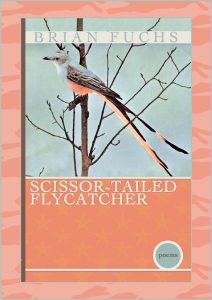
It’s finally out.  And I can finally get some sleep!  Here are the links to my book on Amazon.  I think it looks so much better in paperback, but there is a Kindle version available.


Amazon Paperback

Amazon Kindle

If you don’t already know what’s up, here’s a little backstory.  I’ve been writing since I was a child.  My first poem that I remember was written in October 1988 when I was 9 years old.  When I was 12, my teacher accused me of plagiarism because she didn’t think a child could write.  I don’t say that to congratulate myself at all.  I’m not even sure if that was worth all the aggravation.  It has been lost to time.  It was titled Paige and it was about the life of a woman who never finds happiness.  But I imagine the actual poem would seem completely juvenile now.

I started writing in earnest in college and since 1997 I have written consistently.  While I veer off into other projects, like short stories or novels, I find poetry that I always return to poetry and enjoy writing it.  Over the years, I’ve developed my own style.  That is a good thing.  The problem is that I also haven’t had serious critique of my work since I graduated from college, so I don’t actually know how my work is seen by others.  I’m amazed that I’ve managed to spend the better part of 20 years unwilling to share my work for fear of rejection.  And I really should have managed that sooner!

When I lost Mom last year, the first thing I did was crawled into a metaphorical hole for 9 months.  I wanted to disappear because I didn’t understand how one can live without his mama, and I’m not too proud to say it.  It also brought a few things into focus.  One of those things was letting go of the expectations and opinions of others.  Now, I mean of me as a person, not my work.  That is a lesson that has been taught to me my entire life, but sometimes things need to cook for a while.

So, now I’ve got a book.  I worked diligently over the summer to get it done.  My garden is sad and neglected, my roommate is sad and neglected, and my family… well, they are too busy to have noticed, but if they had I imagine they would feel sad and neglected.  For this first collection of poems (because I don’t want it to be the last!), I wanted to focus on a few things: 1. Poems with very specific references to people.  It’s not that I won’t write that way in the future, but I wanted to give people the words I had written for them before getting into other subjects.  2. Epitaphs.  I’ve lost a lot of people and I often have things to say about that.  I’d like to get through a lot of those I’ve had lying around, but there are many more.  3. My very favorite poems I’ve written… that aren’t too scandalous.  I get it, family will buy this first book. They will even hang on for a second, but by the third they won’t be too fussed about it.  So, I have actually created a plan where my third book is where I completely let my hair down.  That does mean I have to do at least 2 more books, but it also sounds like I’m censoring myself.  In a way I am, but I’m not completely either.  I want my prudish great aunt to be able to have something she will never read, but that won’t make her blush too much if she decides to open it up.

Last thing I will say about it, I decided to make notes on each poem.  Rather than include them in the actual printed book, they can be found here… in the writing tab, or at this link.

Notes

Written 21 September 2019 in Payne County, Oklahoma.

Brian Fuchs, “1975” from Okie Dokie (Scissortail Press, 2019)

Published in Social Distances (Scissortail Press, 2020)

Triticum aestivum

Soon enough we’ll be old and nostalgic.
You’ll talk about the prices of wheat and corn
like you grew up on a farm
instead of being a spectator at the rodeo.
I won’t understand the language of agriculture,
but I won’t care because you’ll remind me of mom.

Notes

Written 20 September 2019 in Payne County, Oklahoma

Brian Fuchs, “Triticum aestivum” from Okie Dokie (Scissortail Press, 2019)

Gleditsia triacanthos

You were beautiful once, and maybe you still are.
I rarely revisit those moments when we became adults
on Sunday mornings, skipping church for each other.
I don’t think about the length of your neck
and I don’t dwell on the smell of you skin.
I’ve turned you upside down, exposed the roots
and tried to understand how they worked,
rubbing the soil into the grooves of my skin.
I don’t want to return to your kindness or cruelty,
and I don’t want to put you back how I found you;
Your branches are thorny and I’d end up hurt again.
So, I’ll repaint the photos I have of you in new colors
and we can pretend that there were no feelings.
And I’ll send you copies of the new versions
and you can pretend that you don’t remember.

Notes

Written 18 September 2019 in Payne County, Oklahoma.

Brian Fuchs, “Gleditsia triacanthos” from Okie Dokie (Scissortail Press, 2019)

Pieces of Dissected Butterflies

I left Tulsa when my friends had died
and we were all set adrift, angry and lost,
wondering if staying meant more of us would die.
I tried to go to Dallas, to a life I wanted.
They boys swarm thickly there,
and I still wonder if my days would have been
spent in the beds of strangers if I’d gone there.
I’ve always longed for the beds of strangers,
to feel taken for granted and awkward.

In moving, I detoured, finding myself in Anchorage,
near the place where my dad spent his youth,
carried on winds I rode for too long, or just long enough.
I was not qualified for life in Alaska,
not qualified for the men who had gone there.
But I was determined to find myself,
or to find Dad in the places where his friends still lived.
His youth was left in an Alaska that no longer exists,
so my mind found new reasons to keep me there.

I found the spaces I understood,
the pockets of the city that seemed familiar,
bookstores filled with other refugees,
of lives that had started to drift.
My mind invented the things I didn’t know
and the people around me became gods.
I didn’t question that, and I formed a religion.
Their lives were spent being perfect
in ways I could never spend my own life.
They are still gods; I pray to them in darkness,
my soul crying out to be acknowledged.

On cold mornings, I liked to price books,
scanning their barcodes and attaching a sticker.
I would think about my friends,
wonder about the shapes of their bodies,
and worry that they could hear my thoughts.
I’d worry that I was saying the thoughts aloud,
and I’d wait for Kevin to go upstairs to inject his insulin
so I could stop thinking about his waist.
I’m still thinking about his waist.
The decade I’ve had to reflect has made me more curious
and sometimes I worry that he can still hear my thoughts.

I have been dissecting butterflies,
stained glass wings pulled apart
by unwieldy spinning steel fingers
as I think about beauty and conformity,
praying to my gods, mindlessly offering
the insects as a tribute.
I didn’t intend this massacre
and in the lawn lie the tiny lifeless parts.
In the hot sun of the places of my youth,
I don’t have new shapes to fill my mind,
new boys to think about.
I dwell on the boys of my past.

I’m reaching back, feeling myself grasping
for people I can’t always recognize,
the names apparitions in my mind.
Some of the gods’ faces have merged & morphed.
I’m taking the ones I wanted the most,
or the ones I wanted to be the most,
and placing their pieces where I can sort them
and try to hold onto them in my mind.
I’m still thinking about waists and hips and shoulders,
still wondering about the firmness of skin.

They haven’t seen me wondering,
their lives have pulled them toward much happier places,
some growing beautifully in Alaska,
others found scattered by the winds
that had first deposited them near me.
The butterflies are whispering secrets,
understandably warning each other about me.
In new cities and states, in their new lives,
they think about the times we spent together
and I go on thinking about their bodies.

Notes

Written 12 September 2019 in Payne County, Oklahoma.

Brian Fuchs, “Pieces of Dissected Butterflies” from Okie Dokie (Scissortail Press, 2019)

The Rain

I’m still waiting outside for rain,
hoping for sudden downpours from cloudless skies.
I’m wondering if she’ll join me when the first drops
start to fall and the birds fall silent.
She’s been delayed, I’ve told myself again,
or the rain hasn’t been enough.
It has never been enough
I’ve summoned more and more rain,
for over a year I’ve coaxed it from the air,
the ground sometimes swelling, saturated and marshy.

Brush Creek has filled to overflowing,
washing out parts of the road and clearing out
the debris of our distractions.
It has not been enough.
The Cimarron & Arkansas Rivers have been flooded,
swallowing homes and memories,
lives lost and inconvenienced.
Still she has not arrived.
I continue my incantations, calling for more clouds,
more rain — great hurricanes that try to find me,
creeping along the coasts, tied to the oceans.
Florida, Georgia, Louisiana, The Bahamas, Puerto Rico,
they may all need to be sacrificed in my efforts,
and it will be worth the loss because I will
no longer feel like I am alone.
I am listening for those first signs, the drips on the tin roof
and I am ready to throw open the windows,
clench my fists, and try to push my dreams into reality.
I know she will join me if I keep trying,
and we will sit together on the covered porch,
resuming what should still be.

Notes

Written 5 September 2019 in Payne County, Oklahoma.

Brian Fuchs, “The Rain” from Okie Dokie (Scissortail Press, 2019)

Cercis canadensis

When we had tried
putting ourselves together again
we’d used the wrong parts,
made effigies of ourselves
with the piles of distorted junk,
left behind scraps of a once-full life.
We went through the motions of people
spoke like them, practicing their accents,
but did not understand our own words.
We got the phrases wrong,
the tones, the memories.
Periodically, we’d erupt into full color
flowers growing from every part
and our days seemed alive with joy.
But we would catch ourselves lost in time,
eyes fixed on a long-abandoned walker,
a long-absent bed,
a long-neglected garden,
at the things we find so important now
and the flowers would fall from our bodies.
I gave up on trying to find the parts
of myself I missed most,
stopped looking for who I had been before. I’ve been more comfortable with discomfort,
waiting for others to finally leave the safety
of their beds, the safety of their tears.
And we’ve started to share ourselves again,
imagining Spring, redbuds flushed fuchsia,
grief removed from our shoulders,
sadness washed from our faces
by the showers of April and storms of May.
We will remember how to be happy
and how to be sad and how to be,
and we’ll see the long-forgotten remnants
and we will understand who we are.

Notes

Written 19 April 2019 in Payne County, Oklahoma. Rewritten 5 September 2019 in Payne County, Oklahoma.

Brian Fuchs, “Cercis canadensis” from Okie Dokie (Scissortail Press, 2019)


Cercis canadensis

When we had tried
putting ourselves together again
we’d used the wrong parts,
made effigies of ourselves
with the piles of distorted junk,
left behind scraps of a once-full life.
We went through the motions of people
spoke like them, practicing their accents,
but did not understand our own words.
We got the phrases wrong,
the tones, the memories.
Periodically, we’d erupt into full color
flowers growing from every part
and our days seemed alive with joy.
But we would catch ourselves lost in time,
eyes fixed on a long-abandoned walker,
a long-absent bed,
a long-neglected garden,
at the things we find so important now
and the flowers would fall from our bodies.
I gave up on trying to find the parts
of myself I missed most,
stopped looking for who I had been before.
I’ve been more comfortable with discomfort,
waiting for others to finally leave the safety
of their beds, the safety of their tears.
And we’ve started to share ourselves again,
imagining Spring, redbuds flushed fuchsia,
grief removed from our shoulders,
sadness washed from our faces
by the showers of April and storms of May.
We will remember how to be happy
and how to be sad and how to be,
and we’ll see the long-forgotten remnants
and we will understand who we are.

Welcome To My Oklahoma Family

I was looking for something fun to blog about in 2019 and I thought getting into my family’s history might be interesting. I’ve always been interested in the stories that make up our family, and I am particularly interested in the real lives of the folks without a strong an obvious record. I want to know the things I can never know. What sorts of things did my 4th great grandma think about? Was my 6th great uncle happy? What were the sounds and smells of the house of the young families? It’s unfortunate that legal documents form the understanding of the vast majority of our families. I long for journals or diaries, and maybe more of those will be discovered. Until then, I have only the facts and I will try to present as much as I can to try and help understand the various branches of my family.

I’ve been careful to avoid the words ancestry and genealogy until now, but after this explanation, I will use them. I consider myself a family historian and not a genealogist. I find DNA an interesting part of studying one’s own story, but it isn’t the complete story. Who I share genetics with in a lot of cases have less to do with who I am and who my family has been than close friends and communities, or even pets. There are more ways of facing what a family is than simply tracing one’s ancestry. And I’m also not saying that isn’t valid. If you are only interested in that, go for it. Do your thing. I am not trying to prove a pedigree or show how I am related to anyone in particular, so I’m going to look at the whole. I will definitely look at ancestry and trace my family lines, but I just won’t stop there or be defined by what that is.

DNA

I recently got a DNA test from Ancestry.com The broad results are fairly expected. For those who don’t know, DNA tests do not show where someone comes from, but where people with similar DNA can be found today. It might sound like a minor distinction, but it can help understand why results don’t seem 100% what you might expect.

As you can see from my results, I am 69% “England, Wales & Northwestern Europe”, 28% “Ireland & Scotland”, and 3% “Sweden.” The latter two are clear, but “England, Wales & Northwestern Europe” is a large area and does not show distinctions between Germany, Denmark, England, or France. It’s a large area with a lot of countries. I do know generally speaking that my family came to the United States from Germany, Switzerland, Ireland, and England. I am the cliché American profile.

When you look at the migrations map, you will see that there too I am incredibly broadly American, having family that settled everywhere from Pennsylvania to Texas, from Wisconsin to Georgia. I’ve got family who followed Brigham Young to what would become Utah, and family that took up arms on both sides of the Civil War. There are farmers and ministers, grocers and teachers, housewives and merchants. It would be easy to look at my family and find nothing much worth mentioning, but it’s actually the fact that there aren’t a whole lot of notable figures that interests me even more. Who were these everyday folks?

I hope you’ll stick with me. Leave me comments, and if I am talking about a relative we share in common, please add your own stories and photos.

Crepemyrtle (Lagerstroemia)

When I moved to Alaska in 2005 I was struck by those things that were different from my life in Oklahoma.  After getting through that first winter, it became apparent that it wasn’t just the conifer trees that provided a striking contrast to the landscapes of the places I consider home.  The perennials that popped up in the gardens of the area were exotic to me.  They were plants I had known about, but had no experience with.  Columbine, dahlia, lobelia, rhubarb, bleeding hearts, raspberries, wild roses, poppies.  It was a fascinating experience to be surrounded by these new plants, as well as by the old familiar dandelions and lilacs.

I was in Alaska for a number of years and loved those summer months and the beautiful flowers of the area.  What I didn’t expect was how much I would fall in love with the plants of Oklahoma when I returned for vacation.

I was born in Tulsa, Oklahoma on 5 August 1979 and I lived in the state until 2005 when I left for Alaska.  My uncle is a landscape architect, my grandpa was a professor of agronomy and a consultant on soils.  He spent hours daily working on his flowerbeds and vegetable garden on his one acre lot, an oasis of green in the middle of ordinary yards.  Plants were a part of our DNA.  All parts of my family had been farmers, growing broom corn and cotton.  It had never been my world and I barely paid attention to the things growing around me.  I was aware of the various plants in the landscape, but I didn’t know much about those plants.

What I was most struck with on coming back to Oklahoma on a vacation in 2007 was how amazing crepemyrtles are.  They’ve long been a favorite, especially of my grandpa who had them planted heavily around his house and as a backdrop/transition between the trees and flowers in the flowerbeds.  It felt like I was discovering these plants for the first time.

In 2013, I loved back to Oklahoma and these crepemyrtles felt like a focus of my thoughts when I was

at my parents house or at a business.  They are one of the most commonly used plants in Oklahoma, and it’s pretty easy to see why.

Crepemyrtles are native to southeast Asia, with some hybrids being crossed with a taller species from Japan.  They have been a common ornamental plant in America since before the revolution, with both George Washington and Thomas Jefferson’s gardens having at least one specimen plant.  They quickly became a staple in the South, but as they are not generally cold hardy past zone 6 or 7, they were not a part of the gardens of the North and as a result they do not feature in very many of the early seed or nursery catalogs.  When they do start popping up, it is clear that several cultivars have been established from the original pink flowering tree.  You see white, pink, purple, and red listed in those early catalogs.  The purples were what we now refer to as lavender and the red were dark pink.  It took a long time to achieve a true red crepemyrtle.

The cultivars did not change significantly for a long time, with sporadic new plants being introduced a couple each decade until the 1950s.  It was then that hybridization started in more earnest, and the numbers of plants available really exploded.  By the 1970s, new plants were being released at a rate of six to twelve per year, a speed that has only been matched in recent years.  These plants had all started off as trees that grow 20-25 feet, filled from June to September with large panicles of pink flowers.  Now there were bright reds, fuchsias, deep purples, blush pinks, and picotees of white and pink.  Some of them still reached 20 feet or more, while other varieties had been selected to weep only 1-2 feet off the ground.

Crepemyrtles have a couple of drawbacks.  The most obvious is that they don’t put on new leaves until late May or June.  It’s glaring when the rest of the trees have woken up, many of which have gone through their flowering and are now greening out for the summer and the crepemyrtles still are just a cluster of sticks.  It almost feels like nothing will ever happen with them, and then over the course of a few days leaves start popping up from branches that seemed dead for sure.  They grow fast and in less than a month, the plant has put on so much growth that it’s easy to forget that it had waited for so long.  And then it flowers and that wait was worth it, most of them covering themselves in blooms.  Many will stay in bloom until frost, so it’s a showy plant.

They other problem is not so much with crepemyrtles themselves as it is with people who don’t know how to take care of them.  It is very common for crepemyrtles to be cut back heavily by landscapers, often dramatically.  The result is thickly trunked trees with thin branches, often referred to as a witch’s broom effect.  There are two goals these people are trying to accomplish.  One, it keeps the plant small and contained.  Many varieties can grow to 15-25 feet.  Business don’t always want that.  The other thing this does is increase the new growth branches, which is where the flowering occurs on crepemyrtles.  The do not bloom on last years growth.  First, the size of a crepemyrtle can be maintained by planting the correct variety.  Choose the one that fits your space.  Secondly, new growth and blooming can be encouraged by pruning a crepemyrtle by removing old branches that aren’t growing, dead heading panicles, and cutting back weak growth.  Nobody needs to engage in “crapemurders”.

Crepemyrtles may not be native to Oklahoma, or indeed anywhere in zones 7, 8, or 9, but they might as well be.  These flowering trees and shrubs are a part of us now, and I am so glad to have rediscovered them and appreciate them immensely.

Crapemyrtle Database

Please note also that there are different spellings.  The plant is botanically known as Lagerstroemia, but is commonly known as crepemyrtle, crepe myrtle, crapemyrtle, or crape myrtle.  I used the one I prefer above.

Southern Living: Grumpy Gardener’s Crepe Murders 2018

Blackjack Oak

Quercus marilandica ashei

Just outside my bedroom window is a rugged Blackjack Oak.  She isn’t fancy or flashy; neither is she demanding.  She takes care of herself and has a pioneering look about her.

When my parents moved to this property in 2006, most of the native trees were cleared from the areas where they would be living, being replaced with more pleasing fruit trees, crapemyrtles, and one Bradford pear.  Along with a few other trees, they did leave one small oak tree.  That tree offered a shaded spot to sit and enjoy the property, while being a fairly compact plant.  It has not stayed that way.

I moved into this place in 2015.  At that time, the once diminutive oak had become a little more of a presence.  The branches had arched and reached the house, occasionally scraping against the siding.  Ultimately it needed to be trimmed a little, but it’s increased size had created even more of a shaded area, some of its lower branches now no longer putting on leaves.  She had started looking a little bit raggedy.  It made me wonder about how long lived blackjack oaks are, worrying that she had only a limited time left and that I would need to think about  what to do when a replacement or removal was needed.

Blackjack oaks are a type of red oak common from New Jersey to Eastern Kansas and as far south as Georgia and Central Texas.  They are small and hardy trees, happily growing is poor soils and dry areas.  They don’t represent the prettiest of trees, consisting of crooked and twisted branches, many of which stop putting on leaves when those above them block the light.  It gives them a distinctive half-dead appearance that my oak now suffers from, but it does not indicate any sort of problem with the tree itself.  It does have a tendency to droop the leafless branches, making it hard to walk under and requiring annual pruning, but it’s a manageable problem.

These trees are slower growing, but longer lived oaks, especially the western subspecies in Northern Texas, Oklahoma, and Kansas.  These individuals make up a significant percentage of The Cross Timbers, the oak savannah that bisects Oklahoma, separating the heavily wooded East from the arid West.  It’s a forest made up of post oaks, blackjack oaks, and eastern redcedars.  Blackjack oaks can live for more than 200 years, averaging about 80 years.  My fears of needing to replace my tree are unfounded.

No, this isn’t the world’s most beautiful tree.  It’s leaves even feel like they haven’t fully formed, as if they can quite figure out how to evolve into something clear.  The acorns are tiny, barely worth talking about.  The limbs are crooked and bare, at least the lower ones.  They don’t have the lush growth of most of the other trees that surround the house.  However, the tree is home to many birds and those tiny acorns are enjoyed by squirrels and even brazen deer who venture up to the house to graze on them along with the crabapples that grow next to the oak.  And it provides much of my house with shade, having expanded from a shady spot in the center of the yard to a defining feature of the property.

This tree has its issues, but I love her and I’m glad she’s here.

I have never been very much into gardening.  I love having things growing around me, but the process of actually putting those things in the ground and taking care of them… no.  But I’ve found myself with a lot of need for distraction lately.  So, I have turned to gardening.  In the heat.  It;s keeping my brain occupied, but I also keep remembering something my brother talks about all the time: managing one’s expectations.

For years, I’ve watched my parents return from nurseries and garden centers with car loads of beautiful plants for the flowerbeds, but with no idea where they will go or who will plant them.  Inevitably, most of the plants would end up underwatered, unplanted, neglected, or planted in the wrong spots.  The whole ordeal that had started off as fun would end up a disappointment, and a source of frustration.  The expectations did not meet the reality.  The way they managed that was to try to change the reality around them, but that never worked.  Brent’s point was always that it was the expectations that were the problem.

I lived for many years in Alaska.  I love the climate that promotes lots of beautiful growth, but with lots of shade and very little heat.  I would love to have a garden full of cypress trees draped above head, ferns popping out along the bases of the trees, and fuchsias in hanging pots lining the porch.  Moss would grown on the roof of the shed and everyday a light rain would keep the soils moist and the plants would grow up around me and there would be flowers in bloom all summer.  I want a beautiful deck to enjoy the cool evenings and have people over.  Unfortunately, that is not the situation I find myself in.  If I was constantly trying to make that happen, I would spend a lot of my time disappointed and convinced that gardening doesn’t work.  What I have to do is work within the framework available to me.

I want tall shade plants:  Junipers and crapemyrtles are excellent plants that grown to 10-14 feet and provide a great amount of shade.  They have the added benefit of attracting birds and butterflies.  So, I am planning a landscape that depends on these two plants primarily as shade plants.

I want lots of flowers:  Roses.  Roses in Oklahoma, well in my part of Oklahoma, require little care and bloom almost all year.  Climbing roses tied against the house give a nice shade to the inside and allow for the appreciation of blooms.  I also cannot think of a flower that comes in a greater variety of shapes and sizes.  I’ve had a lot of luck with roses, so I’ve popped them in strategically around the house.

I want plants growing on the ground that aren’t grasses:  Grasses are a pretty common xeriscape option, especially as I live on the border of two grass prairies.  I don’t care for them though.  What I do love is vinca, or periwinkle.  Vinca keeps my flowerbeds full of green leaves without having them be full of weeds and grasses.  It also helps keep my soils moist, which the other plants appreciate.

Moss growing on the roof??? Okay, I admit this one is harder to substitute.  So, I’ve decided to try Virginia Creeper.  It does grow wild here, but usually deep in the wooded areas.  If I can provide the right amount of moisture, I’m hoping I can get this creeping vine to grow up the side of the metal shed or vinyl siding on the house.  This one is going to require more effort, and I plan to start it next Spring.

Daily rain?  Now I’ve gone too far!  Brent and I have talked a lot about irrigation systems.  I’m going to invest in the right things so that next year I can have both irrigation and misting available around the house.

I want a new deck:  My back porch is rotting.  It’s time for it to go, and with Brent’s help I’d like to add on a ground level deck with steps down from the house.  It’d be a nice place to spend evenings, as the back yard gets all the evening shade.  That project is happening this fall.

When I look at my plans, they seems overly ambitious.  I worry I’ve gone too far with what I want to do.  Maybe I have.  I’m trying to keep it simple, space out my work, and achieve something more than I have now.  And I have probably set my expectations too high.

So, I’m not going to be creating a replica of the gardens of Versailles, and I won’t be building a living sculpture.  There won’t be any sidewalks with flowers arched above to take a stroll through or fountains with flamingos.  That’s okay.  It doesn’t need to be outlandish to be beautiful.  My plan will probably get pared down over time, or I will wait another year to complete parts of it.  It will be mine, and that is what I’m excited about.  I never really cared about gardening until I started getting my hands dirty.  It’s fun to transform a landscape and to see the plants take shape over time.


Here are the plants I’m interested in ADDING to my landscape:

Here are some of the plants I already have that I wouldn’t mind having more of:

I still feel like I’m in slow motion; the world is rushing around me.  I’m feeling more at peace, but I’m definitely still frustrated and confused.  I suspect I will feel like this for a long time.

Mom and I had ordered a whole bunch of roses to plant around her house and mine.  With the help of Conner and Justin, I got all of those planted.  We planted 17 total new roses.  I’m also attempting to propagate from one of my existing climbing roses, which is going well so far.  The roses were planted on Monday, and one has new leaves already.  I’ve also got honeysuckle started, but only one of six plants is showing new growth so far.  I’ll keep being patient with them.  Here are some of the roses I planted.  I also planted 6 Rosa Rugosas & 1 Lady Banks Climbing Rose, not pictured.  (Rose Bushes Pictured:  Copper, JFK, Pink Fairy Cushion, Oranges N Lemons; Climbing Roses Pictured: Lemon Butter, Zephirine Drouhin, White Dawn, Orange Velvet)

I’ve also got things around the house planned for times when it is too hot.  I’m trying to fill my time up with projects, and that seems to be helping a little bit at least.

The porch cats now have 5 kittens.  Last year only 1 kitten survived (of 2), so they are already having a more successful year.  Most of the time I wish they’d all just disappear, but I do like when their are kittens to play with.  That almost makes all these cats worth having!

I got started on thank you cards.  It’s a job; a much bigger job than I expected.  I’m not falling apart writing them, and that makes me feel a little better about things.

Next week I’m hoping to finish up the thank you cards and get a few more things planted.  I’m also hoping the lawn mower returns home; it’s been in the shop for 3 weeks now.  I have grass turning into a forest out there!

Artists featured on the site this week:

The Oklahoma Family Tumblr is going well.  People, mostly family, seem to be enjoying the photos!


SaveSave

I watched a TED talk by Roman Mars, the man behind the 99% Invisible blog.  It was on the subject of city flags and I didn’t expect much from it; it had come up on YouTube’s autoplay after a video I had chosen to watch.  I was eating dinner, so I just let it go.  I was immediately hooked and by the end I found myself googling flags for cities where I’ve lived to see how bad they are.  And mostly, they are pretty bad.  I couldn’t get it off my mind, so I went to Photoshop and started to make my own.  As Mars points out in his talk, people are passionate about the flag for the city where they live, and people are usually pretty terrible when it comes to great design.

The loudest voices tend to not understand why a flag like the Union Jack, for example,  is so important for the identity of the United Kingdom.  This was apparent during last year’s call for a change to the city flag of Provo, Utah.  It had long been considered one of the worst, but the proposed change caused controversy.  When opened up to the public, the types of submissions received largely failed to follow the basic principles of design, opting instead to put in some sort of agenda for the city.  Flags are unifying, not political.  In the end, Provo voted for and chose a fantastic new flag, one other cities should be envious of.  But it was an uphill battle, which is somewhat surprising… or should be.

New Zealand is in the midst of a second referendum to change their country’s flag to something divorced from their Australian neighbors.  It was bound to be controversial; the current flag was adopted in 1902.  It seems, however, that the issue is more about people not really caring, and opting to vote for the status quo as a way of making that point.  But the prime minister has a point.  The current flag is nearly identical to Australia’s flag, and like it still has the Union Jack on it.  While New Zealand is a part of the Commonwealth, most countries within it have modified their flags following independence in the 1930s and 1940s.  Canada’s fantastic flag is a great example.  The Union Jack persisted on the flag for a while, but by the mid-1960s, the maple leaf flag had been adopted, cementing a true identity for Canadians, removed from that of the people of the United Kingdom.  They do share a queen, but they do not share a cultural identity.  Their flag drives that point and gives the separate peoples something to make them special.  As for New Zealand, they may choose to keep their current flag.  I personally think they should change it.  The proposed change, chosen in a vote last year, is pretty great.  I would’ve gone further and removed the stars, but it’s still a great looking flag.

Looking at state city flags in the United States, I found a strong tendency to stick the state or city seal in a field of color, usually blue, and call that a flag.  And that looks stupid 100% of the time.  A seal can be a beautiful piece of art, incorporating a surprising amount of history into a (usually) circular emblem.  A flag, however, is not a history of one’s city.  It is a symbolic representation of the city.  It’s an icon, a place reduced to the simplest form possible.  The United States flag is another great example of a former British Colonial flag that came into its own with the removal of the Union Jack.  The thirteen colonies had a flag, similar to the current United States flag, but instead of stars there was the Union Jack.  Changing that portion to a field of blue with a star for each state not only changed the meaning of the flag, but it retained its sense of history.  It acknowledges where we came from, but makes clear that we are no longer a part of the British Empire.

Flag_of_the_United_States.svgThe Great Seal of the United States, which can be seen on any one dollar bill, is beautiful.  It features an eagle clutching an olive branch in one talon, arrows in the other talon, thirteen stars above the eagle’s head and a banner in its beak with the motto e pluribus unum written on it.  The olives, leaves, stars, and arrows all number thirteen to honor the original colonies.  The reverse features a pyramid with the Eye of Providence, featuring annuit cœptis written above and novus ordo seclorum written in a banner underneath.  These symbols on our seal feel very american and very much a part of who we are.  The flag, however, is not that.  It has no motto written across it and the name of our country does not appear at the bottom to remind us of what it is for.  We don’t need that reminder, and because the flag is so simple, and fantastically so, neither does anyone else.

One of my favorite city seals is that of Tulsa, Oklahoma.  It’s a really lovelypiece that must look great on letterhead, on business cards, and affixed to the city’s buildings.  It says a lot about the city in a small space.  But the city’s flag is exactly that seal in the middle of a white flag.  It gets lost.  It has no power there and just fails to generate the power it should as a symbol of a city.  I’ve created my own, one I think that honors the city’s seal while becoming more of a symbol that could be adapted in a lot of ways,  making way for a unifier for a city.  It could be something one is proud to put on a bumper sticker or a a patch on a backpack.  Business could use parts of it to mark themselves as local.  It does, in my opinion, the things a flag should do.

It surprised me how much I cared about flags.  Roman mars had started his TED talk with the assertion that 100% of people care about flags.  I raised an eyebrow at that. I did not think I did care about flag all that much, but I really do.  And I think others do as well.  But I do think it’s harder than people think to create a great flag for a city. It would be nice for these flags to change and a symbol of pride become available for cities whose flags just don’t work.

I haven’t picked on Oklahoma’s state flag much.  The state flag of my state is nice, and the official version from 1925 to 1941 was fantastic.  “OKLAHOMA” was added to the flag in 1941, which was unnecessary.  Supposedly, it was done as a literacy statement, but I’m not really sure how the name of one’s state on a flag truly promotes literacy.  At this point, the lettering could go.  Nobody would confuse the flag with another state’s.  I might also stylize the elements a bit.  I was able to draw the flag when I was a kid, but I remember it being overly intricate.

While I was tackling Tulsa’s flag, I made a whole bunch of flags.  Some of them are for communities that are small enough that they have never had a flag of their own, some are redesigns.  One is even for a community that doesn’t have residents year-round.  All were thought through, giving consideration to the various specifics of the town or city.  And I couldn’t help myself – I made some for fantasy places too.  Let me know what you think.

.

SaveSave

I’ve been thinkinHomeg about the concept of ‘home’ for a while now.  What is it that give our spaces that feeling that makes us feel good being there.  It isn’t uncommon for an apartment to feel distinctly not homey, particularly ones first apartment after leaving the house where parents and siblings still reside.  It makes tempting the idea that it is the people that make for a feeling of ‘home.’  But it seems equally common for an apartment to feel like the place where that person will spend the rest of their life.  And that happens to folks who live alone.  So, is it the people at all?

I love being with my family.  There was always something about returning for a visit to my childhood home that had a fantastic mix of nostalgia, comfort, and distance.  In 2005, I moved far enough away that visiting required planning and money; my visits to my hometown were reduced to about once every two years.  By my first visit, my parents had sold my childhood home and moved to the country into a brand new manufactured home while they planned out their dream home.  There was no way, I thought, to feel at home in a mobile home sat in the trees just outside of town.

I was wrong.  While it wasn’t the same, the feeling was.  I was in a house that had only even existed for about a year, but it was filled with familiar furniture and my parents.  For me, that ruled out the structure and the location.  What seemed to be at play was the combination of the people, the memories I carried with me, and the stuff in the house.  Had my parents simultaneously discovered their mutual love for Victorian furnishings, throwing out the carefully cultivated collection of things in the house, I think the space would have felt as cold as I expected it to.  These objects brought with them the stories that define us as a family.

“I always want objects in my home that have a connection to me or something I’ve loved.  It’s still stuff, but it’s stuff that has meaning.” Nate Berkus makes a great point, and one I’d like to explore in depth for myself.  When I had one of those cold apartments, just out of high school, it was filled with items I can barely remember, mass produced and cheap things.  The only items I even clearly recall are items that had a story, even if the item wasn’t old.  The dresser my dad painted for me for my new place, the sofa he reupholstered, and that is about it.  It would take me years to collect items of meaning, to be given things once belonging to grandparents and parents, and to have the maturity to honor those things and treat them with the respect they had earned.

Six months ago, I moved into the mobile home where my parents spent years hoping to build their dream home.  They settled into their new house over the summer, leaving vacant a space that had surprised me, on a land that is peaceful and beautiful.  I’m honored to live here in this space that has become a part of the story, where my nephews spent so much of their childhood, where birthdays were celebrated, where holidays with family were enjoyed, and where my parents lived and loved and convalesced.

Many of the stories are lost; it had been incumbent on me to ask the necessary questions and carry on the mythologies and lessons of my family, but I have failed to do so.  But I’d still like to explore what meanings these artifacts have for my life, for the lives of my family members, to recall the world in which they came to us and present them to the world.

This is the first entry in a series about my things.

Dale

I sought the council of trees, Dale’s name lingering in my head,
hoping to glean wisdom from the aged assembly,
hoping to hear God through the woody branches.
I studied the structure of oak leaves, how each attached to a branch;
watched sunlight fall through the new growth on cedars;
made note of the greenbriar’s leafy fingers wrapping around the trunks of pecans.
The world was still and hot and dotted with tiny white butterflies
emerging from the thickets to enjoy a field of nectar-filled flowers in the afternoon sun.
My mind had been typically cluttered, with family dramas,
thirteen years of grief, first loves, comedy routines,
and parts of a jingle from a TV commercial I remembered from childhood.
Sitting in the surrounding quiet, I waited for the ancient botanical knowledge,
letting those thoughts drop away, heavy and viscous,
and leaving behind a calm in which I could almost hear the butterflies landing on petals.
The wind came gently then, in small bursts that the oaks seem to enjoy,
allowing the trees to flit thousands of leaves about merrily.
A rustle, a calm and relaxing rustle accompanied by silent mimics,
of a host of lesser plants vying for the favor of the post oaks,
standing as the monarchs of this dry woodland.
A slightly stronger breeze, a creaking sound as older specimens swayed,
some long dead, the bony outer branches moaning hauntingly in the current.
The tranquility was broken, butterflies scattered unceremoniously into the air,
having been blown off their perches by a strong wind that moved through the grasses,
flattening it in waves as it moved across the expanses.
When the wind reached the sentinels of trees standing bravely against it,
they found themselves unprepared and leaves and branches erupted into chaos.
Dale had died.
He had been my namesake, the hero and villain of his own stories,
his name lingered, attached to mine as a reminder of who he no longer was
and as a reminder of who he had been capable of being,
a reminder of who we all had been, of what we wanted to say we had been.
And now he was gone. As the gust moved on in the distance,
stillness returned to the trees and I still faced them, waiting for answers.
We were all there, waiting for different pieces, prostrating ourselves before them.
The instructions were lost, the knowledge never passed on,
the person whose position had been placed so highly seeming to fade
with great distances, separated by different trees, grasses, weeds.
His name lingered, attached to mine as a reminder that we should hold on,
hold him up as he fell, his wings revealed to be a mirage.
It was not always enough, we were not always enough,
and we allowed Dale to slip into humanness.
The trees had again become silent. The distances now as close as they would ever be,
as far somehow as they had felt before when inscribed books would
arrive by mail, wrapped in symbols of birthdays or holidays or plainly
when a book had piqued Dale’s desire to share it with me,
a boy he barely knew, but to whom his name was attached.
And there were songs and great conversations, which are things
of which plants know little. And things that had defined him
so importantly that it felt proper to discuss them now, with God or the trees.
The heat had started to intensify; beads of sweat formed on my neck and face.
Still I waited, knowing that lives had become altered, knowing that we had reached
both the beginning and the end of everything.
And I thought about whittled walking sticks, carefully crafted from the new growth.
His name lingered in my mind, attached to the trees, I now realized, a part of it.
The presence of butterflies had increased in my focused state;
they now seemed to be everywhere, clustered on flowers
and dancing through the space between the trees.
I turned and went back to the house, knowing and not knowing,
melding now with the air and grass, with the trees.
And I thought about Dale, his name lingering there, attached to mine,
attached to the moment and those memories,
attached to the wings of hundreds of tiny butterflies
And I smiled because I had known him.

Notes

Brian Fuchs, “Dale” from Okie Dokie (Scissortail Press, 2019)

Written 25 July 2015 in Payne County, Oklahoma.