Quentin Clingerman Has Died

The winds are picking up
blowing trash into my yard
and announcing a storm that will
fall apart before it arrives.
The worn out flags and crosses
still look as majestic as they did,
but I’m opening by insides
and filling my pages with secrets.
I’m waiting for critiques
by entrenched folks who think
too much about the sex lives
of other people, of my sex life.
I want to reveal myself again,
try to make people see my words
and my techniques and stop worrying
about who I’ve kissed or
who I haven’t, but wanted to.
I want to edit volumes of poetry
about God and America and guns,
poems filled with the lies we tell ourselves
and enjoy them because the author
knew how to write the words beautifully.
I don’t want to read the judgement.
It starts to rain and I’m surprised;
I thought the rain would miss us.

Notes

Written 21 September 2019 in Payne County, Oklahoma.

Brian Fuchs, “Quentin Clingerman Has Died” from Okie Dokie (Scissortail Press, 2019)

Planting season is pretty much over for most of us, and now we enjoy the gardens we put together for the summer.  I have been giving some thought to which steps to take next on my landscape plan.  I’ll definitely want to plant trees and bulbs in the fall, and I want to start thinking about specific varieties of anything I might want for Spring 2019.  I like having a plan.  While I’ve been looking this year, I’ve kept thinking about how fun it would be to have a themed flowerbed or garden.

I worry about America’s future at the moment.  I love this country, and it seems like those who do not are successfully usurping authority and trying to reshape this into an authoritarian country.  So, I feel compelled to wax nostalgic about my love of this country in various ways.  So, in that spirit, here are some suggestions for a patriotic flowerbed.

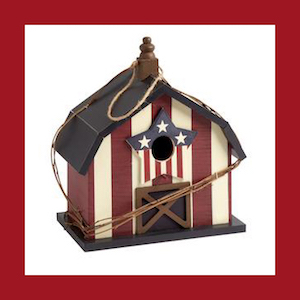
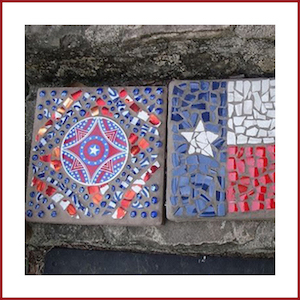
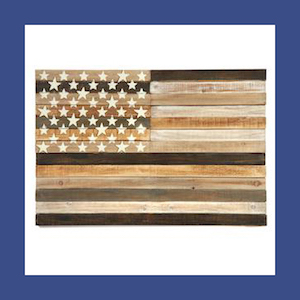
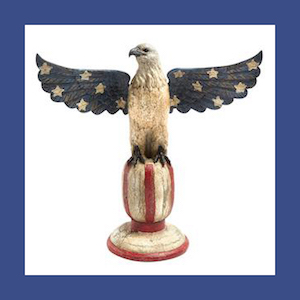
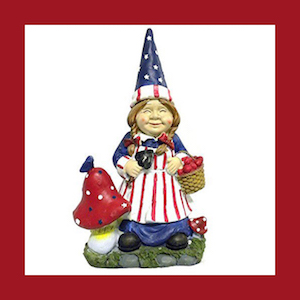
Go easy on the decor and ornaments.  A few things are good, but you don’t need flags & pinwheels & bows covering everything.  Just try some accents.  What I love about the wood flag is that it allows the flowers to do the work, while still giving that Americana vibe.  One garden gnome, a bird house, a few stepping stones, or even an eagle for your porch is enough to convey the idea without beating the theme to death.

Here are some plant suggestions.  I’ve tried to include things that allow for color throughout the year, and obviously not all plants work in all places.  These are just my own suggestions.

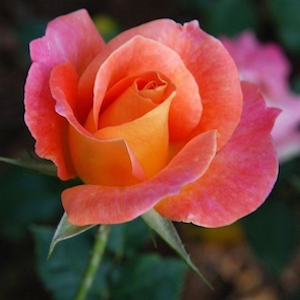
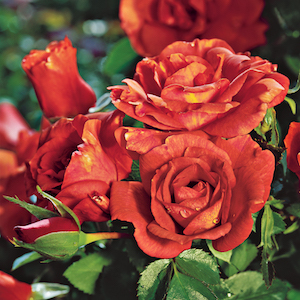
Not into the red, white, & blue color scheme?  Try creating a First Lady Rose garden.  Here are some of my favorites:

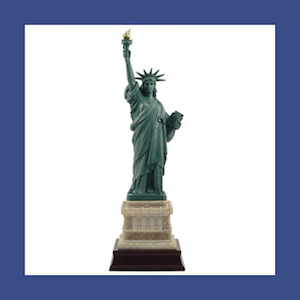
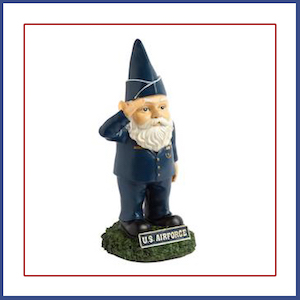
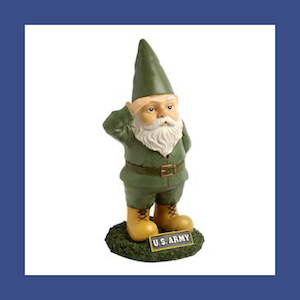
Adding a military gnome or classic monument can help personalize the garden.  A Statue of Liberty or Mt Rushmore souvenir added to the right spot in a garden would be fun.

Here are some more America themed flowers that I love

Ambitious indoor gardeners might even want to try a First Lady Orchid or two.  Here are two I really like

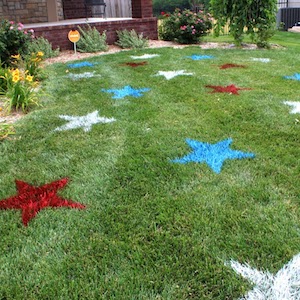
Want to do something fun, but you already have a garden, why not paint some stars on the lawn for the summer.  Use building site spray paints.  As the grass grows and is mowed, they will disappear, but they will be fun for the 4th of July, Memorial Day, or for an event.

I watched a TED talk by Roman Mars, the man behind the 99% Invisible blog.  It was on the subject of city flags and I didn’t expect much from it; it had come up on YouTube’s autoplay after a video I had chosen to watch.  I was eating dinner, so I just let it go.  I was immediately hooked and by the end I found myself googling flags for cities where I’ve lived to see how bad they are.  And mostly, they are pretty bad.  I couldn’t get it off my mind, so I went to Photoshop and started to make my own.  As Mars points out in his talk, people are passionate about the flag for the city where they live, and people are usually pretty terrible when it comes to great design.

The loudest voices tend to not understand why a flag like the Union Jack, for example,  is so important for the identity of the United Kingdom.  This was apparent during last year’s call for a change to the city flag of Provo, Utah.  It had long been considered one of the worst, but the proposed change caused controversy.  When opened up to the public, the types of submissions received largely failed to follow the basic principles of design, opting instead to put in some sort of agenda for the city.  Flags are unifying, not political.  In the end, Provo voted for and chose a fantastic new flag, one other cities should be envious of.  But it was an uphill battle, which is somewhat surprising… or should be.

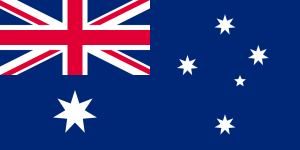
New Zealand is in the midst of a second referendum to change their country’s flag to something divorced from their Australian neighbors.  It was bound to be controversial; the current flag was adopted in 1902.  It seems, however, that the issue is more about people not really caring, and opting to vote for the status quo as a way of making that point.  But the prime minister has a point.  The current flag is nearly identical to Australia’s flag, and like it still has the Union Jack on it.  While New Zealand is a part of the Commonwealth, most countries within it have modified their flags following independence in the 1930s and 1940s.  Canada’s fantastic flag is a great example.  The Union Jack persisted on the flag for a while, but by the mid-1960s, the maple leaf flag had been adopted, cementing a true identity for Canadians, removed from that of the people of the United Kingdom.  They do share a queen, but they do not share a cultural identity.  Their flag drives that point and gives the separate peoples something to make them special.  As for New Zealand, they may choose to keep their current flag.  I personally think they should change it.  The proposed change, chosen in a vote last year, is pretty great.  I would’ve gone further and removed the stars, but it’s still a great looking flag.
Looking at state city flags in the United States, I found a strong tendency to stick the state or city seal in a field of color, usually blue, and call that a flag.  And that looks stupid 100% of the time.  A seal can be a beautiful piece of art, incorporating a surprising amount of history into a (usually) circular emblem.  A flag, however, is not a history of one’s city.  It is a symbolic representation of the city.  It’s an icon, a place reduced to the simplest form possible.  The United States flag is another great example of a former British Colonial flag that came into its own with the removal of the Union Jack.  The thirteen colonies had a flag, similar to the current United States flag, but instead of stars there was the Union Jack.  Changing that portion to a field of blue with a star for each state not only changed the meaning of the flag, but it retained its sense of history.  It acknowledges where we came from, but makes clear that we are no longer a part of the British Empire.

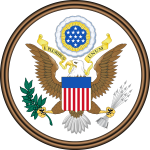
Flag_of_the_United_States.svgThe Great Seal of the United States, which can be seen on any one dollar bill, is beautiful.  It features an eagle clutching an olive branch in one talon, arrows in the other talon, thirteen stars above the eagle’s head and a banner in its beak with the motto e pluribus unum written on it.  The olives, leaves, stars, and arrows all number thirteen to honor the original colonies.  The reverse features a pyramid with the Eye of Providence, featuring annuit cœptis written above and novus ordo seclorum written in a banner underneath.  These symbols on our seal feel very american and very much a part of who we are.  The flag, however, is not that.  It has no motto written across it and the name of our country does not appear at the bottom to remind us of what it is for.  We don’t need that reminder, and because the flag is so simple, and fantastically so, neither does anyone else.
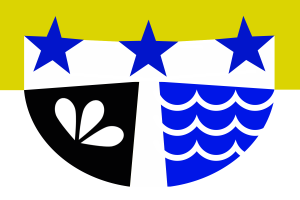
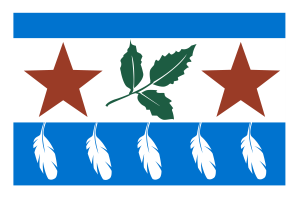
One of my favorite city seals is that of Tulsa, Oklahoma.  It’s a really lovelypiece that must look great on letterhead, on business cards, and affixed to the city’s buildings.  It says a lot about the city in a small space.  But the city’s flag is exactly that seal in the middle of a white flag.  It gets lost.  It has no power there and just fails to generate the power it should as a symbol of a city.  I’ve created my own, one I think that honors the city’s seal while becoming more of a symbol that could be adapted in a lot of ways,  making way for a unifier for a city.  It could be something one is proud to put on a bumper sticker or a a patch on a backpack.  Business could use parts of it to mark themselves as local.  It does, in my opinion, the things a flag should do.

It surprised me how much I cared about flags.  Roman mars had started his TED talk with the assertion that 100% of people care about flags.  I raised an eyebrow at that. I did not think I did care about flag all that much, but I really do.  And I think others do as well.  But I do think it’s harder than people think to create a great flag for a city. It would be nice for these flags to change and a symbol of pride become available for cities whose flags just don’t work.

I haven’t picked on Oklahoma’s state flag much.  The state flag of my state is nice, and the official version from 1925 to 1941 was fantastic.  “OKLAHOMA” was added to the flag in 1941, which was unnecessary.  Supposedly, it was done as a literacy statement, but I’m not really sure how the name of one’s state on a flag truly promotes literacy.  At this point, the lettering could go.  Nobody would confuse the flag with another state’s.  I might also stylize the elements a bit.  I was able to draw the flag when I was a kid, but I remember it being overly intricate.

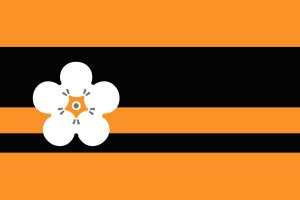
While I was tackling Tulsa’s flag, I made a whole bunch of flags.  Some of them are for communities that are small enough that they have never had a flag of their own, some are redesigns.  One is even for a community that doesn’t have residents year-round.  All were thought through, giving consideration to the various specifics of the town or city.  And I couldn’t help myself – I made some for fantasy places too.  Let me know what you think.

.

SaveSave