My Native Valley

Lacosha! you kept passing by.
We never picked bright yellow
flowers in the fields on Spring mornings,
and we never chased rabbits
through people’s backyards on
Autumn afternoons.
I’m still looking for words,
my voice muffled by fear,
to invite you to my birthday party.

Notes

Written 15 February 2020 in Payne County, Oklahoma.

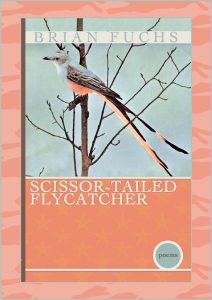
Brian Fuchs, “My Native Valley” from Scissor-tailed Flycatcher (Scissortail Press, 2020)

Cercis canadensis

When we had tried
putting ourselves together again
we’d used the wrong parts,
made effigies of ourselves
with the piles of distorted junk,
left behind scraps of a once-full life.
We went through the motions of people
spoke like them, practicing their accents,
but did not understand our own words.
We got the phrases wrong,
the tones, the memories.
Periodically, we’d erupt into full color
flowers growing from every part
and our days seemed alive with joy.
But we would catch ourselves lost in time,
eyes fixed on a long-abandoned walker,
a long-absent bed,
a long-neglected garden,
at the things we find so important now
and the flowers would fall from our bodies.
I gave up on trying to find the parts
of myself I missed most,
stopped looking for who I had been before. I’ve been more comfortable with discomfort,
waiting for others to finally leave the safety
of their beds, the safety of their tears.
And we’ve started to share ourselves again,
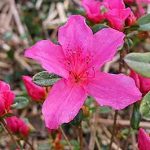
imagining Spring, redbuds flushed fuchsia,
grief removed from our shoulders,
sadness washed from our faces
by the showers of April and storms of May.
We will remember how to be happy
and how to be sad and how to be,
and we’ll see the long-forgotten remnants
and we will understand who we are.

Notes

Written 19 April 2019 in Payne County, Oklahoma. Rewritten 5 September 2019 in Payne County, Oklahoma.

Brian Fuchs, “Cercis canadensis” from Okie Dokie (Scissortail Press, 2019)


Cercis canadensis

When we had tried
putting ourselves together again
we’d used the wrong parts,
made effigies of ourselves
with the piles of distorted junk,
left behind scraps of a once-full life.
We went through the motions of people
spoke like them, practicing their accents,
but did not understand our own words.
We got the phrases wrong,
the tones, the memories.
Periodically, we’d erupt into full color
flowers growing from every part
and our days seemed alive with joy.
But we would catch ourselves lost in time,
eyes fixed on a long-abandoned walker,
a long-absent bed,
a long-neglected garden,
at the things we find so important now
and the flowers would fall from our bodies.
I gave up on trying to find the parts
of myself I missed most,
stopped looking for who I had been before.
I’ve been more comfortable with discomfort,
waiting for others to finally leave the safety
of their beds, the safety of their tears.
And we’ve started to share ourselves again,
imagining Spring, redbuds flushed fuchsia,
grief removed from our shoulders,
sadness washed from our faces
by the showers of April and storms of May.
We will remember how to be happy
and how to be sad and how to be,
and we’ll see the long-forgotten remnants
and we will understand who we are.

Crepemyrtle (Lagerstroemia)
When I moved to Alaska in 2005 I was struck by those things that were different from my life in Oklahoma.  After getting through that first winter, it became apparent that it wasn’t just the conifer trees that provided a striking contrast to the landscapes of the places I consider home.  The perennials that popped up in the gardens of the area were exotic to me.  They were plants I had known about, but had no experience with.  Columbine, dahlia, lobelia, rhubarb, bleeding hearts, raspberries, wild roses, poppies.  It was a fascinating experience to be surrounded by these new plants, as well as by the old familiar dandelions and lilacs.

I was in Alaska for a number of years and loved those summer months and the beautiful flowers of the area.  What I didn’t expect was how much I would fall in love with the plants of Oklahoma when I returned for vacation.

I was born in Tulsa, Oklahoma on 5 August 1979 and I lived in the state until 2005 when I left for Alaska.  My uncle is a landscape architect, my grandpa was a professor of agronomy and a consultant on soils.  He spent hours daily working on his flowerbeds and vegetable garden on his one acre lot, an oasis of green in the middle of ordinary yards.  Plants were a part of our DNA.  All parts of my family had been farmers, growing broom corn and cotton.  It had never been my world and I barely paid attention to the things growing around me.  I was aware of the various plants in the landscape, but I didn’t know much about those plants.

What I was most struck with on coming back to Oklahoma on a vacation in 2007 was how amazing crepemyrtles are.  They’ve long been a favorite, especially of my grandpa who had them planted heavily around his house and as a backdrop/transition between the trees and flowers in the flowerbeds.  It felt like I was discovering these plants for the first time.

In 2013, I loved back to Oklahoma and these crepemyrtles felt like a focus of my thoughts when I was

at my parents house or at a business.  They are one of the most commonly used plants in Oklahoma, and it’s pretty easy to see why.

Crepemyrtles are native to southeast Asia, with some hybrids being crossed with a taller species from Japan.  They have been a common ornamental plant in America since before the revolution, with both George Washington and Thomas Jefferson’s gardens having at least one specimen plant.  They quickly became a staple in the South, but as they are not generally cold hardy past zone 6 or 7, they were not a part of the gardens of the North and as a result they do not feature in very many of the early seed or nursery catalogs.  When they do start popping up, it is clear that several cultivars have been established from the original pink flowering tree.  You see white, pink, purple, and red listed in those early catalogs.  The purples were what we now refer to as lavender and the red were dark pink.  It took a long time to achieve a true red crepemyrtle.

The cultivars did not change significantly for a long time, with sporadic new plants being introduced a couple each decade until the 1950s.  It was then that hybridization started in more earnest, and the numbers of plants available really exploded.  By the 1970s, new plants were being released at a rate of six to twelve per year, a speed that has only been matched in recent years.  These plants had all started off as trees that grow 20-25 feet, filled from June to September with large panicles of pink flowers.  Now there were bright reds, fuchsias, deep purples, blush pinks, and picotees of white and pink.  Some of them still reached 20 feet or more, while other varieties had been selected to weep only 1-2 feet off the ground.

Crepemyrtles have a couple of drawbacks.  The most obvious is that they don’t put on new leaves until late May or June.  It’s glaring when the rest of the trees have woken up, many of which have gone through their flowering and are now greening out for the summer and the crepemyrtles still are just a cluster of sticks.  It almost feels like nothing will ever happen with them, and then over the course of a few days leaves start popping up from branches that seemed dead for sure.  They grow fast and in less than a month, the plant has put on so much growth that it’s easy to forget that it had waited for so long.  And then it flowers and that wait was worth it, most of them covering themselves in blooms.  Many will stay in bloom until frost, so it’s a showy plant.

They other problem is not so much with crepemyrtles themselves as it is with people who don’t know how to take care of them.  It is very common for crepemyrtles to be cut back heavily by landscapers, often dramatically.  The result is thickly trunked trees with thin branches, often referred to as a witch’s broom effect.  There are two goals these people are trying to accomplish.  One, it keeps the plant small and contained.  Many varieties can grow to 15-25 feet.  Business don’t always want that.  The other thing this does is increase the new growth branches, which is where the flowering occurs on crepemyrtles.  The do not bloom on last years growth.  First, the size of a crepemyrtle can be maintained by planting the correct variety.  Choose the one that fits your space.  Secondly, new growth and blooming can be encouraged by pruning a crepemyrtle by removing old branches that aren’t growing, dead heading panicles, and cutting back weak growth.  Nobody needs to engage in “crapemurders”.

Crepemyrtles may not be native to Oklahoma, or indeed anywhere in zones 7, 8, or 9, but they might as well be.  These flowering trees and shrubs are a part of us now, and I am so glad to have rediscovered them and appreciate them immensely.

Crapemyrtle Database

Please note also that there are different spellings.  The plant is botanically known as Lagerstroemia, but is commonly known as crepemyrtle, crepe myrtle, crapemyrtle, or crape myrtle.  I used the one I prefer above.

Southern Living: Grumpy Gardener’s Crepe Murders 2018

Planting season is pretty much over for most of us, and now we enjoy the gardens we put together for the summer.  I have been giving some thought to which steps to take next on my landscape plan.  I’ll definitely want to plant trees and bulbs in the fall, and I want to start thinking about specific varieties of anything I might want for Spring 2019.  I like having a plan.  While I’ve been looking this year, I’ve kept thinking about how fun it would be to have a themed flowerbed or garden.

I worry about America’s future at the moment.  I love this country, and it seems like those who do not are successfully usurping authority and trying to reshape this into an authoritarian country.  So, I feel compelled to wax nostalgic about my love of this country in various ways.  So, in that spirit, here are some suggestions for a patriotic flowerbed.

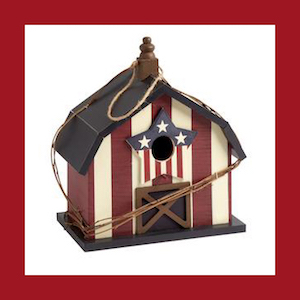
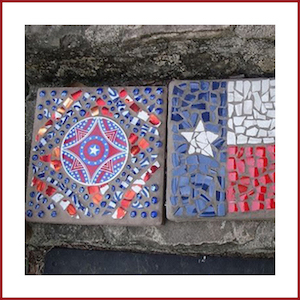
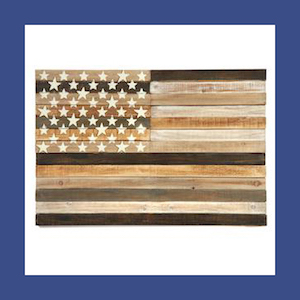
Go easy on the decor and ornaments.  A few things are good, but you don’t need flags & pinwheels & bows covering everything.  Just try some accents.  What I love about the wood flag is that it allows the flowers to do the work, while still giving that Americana vibe.  One garden gnome, a bird house, a few stepping stones, or even an eagle for your porch is enough to convey the idea without beating the theme to death.

Here are some plant suggestions.  I’ve tried to include things that allow for color throughout the year, and obviously not all plants work in all places.  These are just my own suggestions.

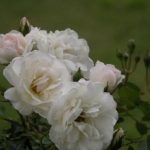
Not into the red, white, & blue color scheme?  Try creating a First Lady Rose garden.  Here are some of my favorites:

Adding a military gnome or classic monument can help personalize the garden.  A Statue of Liberty or Mt Rushmore souvenir added to the right spot in a garden would be fun.

Here are some more America themed flowers that I love

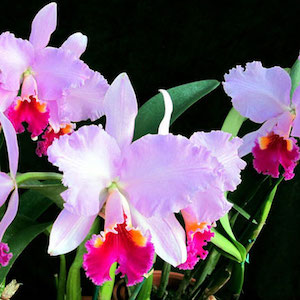
Ambitious indoor gardeners might even want to try a First Lady Orchid or two.  Here are two I really like

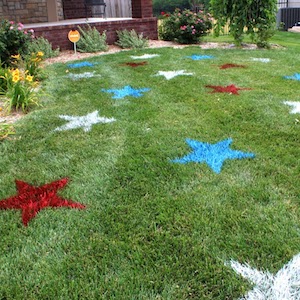
Want to do something fun, but you already have a garden, why not paint some stars on the lawn for the summer.  Use building site spray paints.  As the grass grows and is mowed, they will disappear, but they will be fun for the 4th of July, Memorial Day, or for an event.

I have never been very much into gardening.  I love having things growing around me, but the process of actually putting those things in the ground and taking care of them… no.  But I’ve found myself with a lot of need for distraction lately.  So, I have turned to gardening.  In the heat.  It;s keeping my brain occupied, but I also keep remembering something my brother talks about all the time: managing one’s expectations.

For years, I’ve watched my parents return from nurseries and garden centers with car loads of beautiful plants for the flowerbeds, but with no idea where they will go or who will plant them.  Inevitably, most of the plants would end up underwatered, unplanted, neglected, or planted in the wrong spots.  The whole ordeal that had started off as fun would end up a disappointment, and a source of frustration.  The expectations did not meet the reality.  The way they managed that was to try to change the reality around them, but that never worked.  Brent’s point was always that it was the expectations that were the problem.

I lived for many years in Alaska.  I love the climate that promotes lots of beautiful growth, but with lots of shade and very little heat.  I would love to have a garden full of cypress trees draped above head, ferns popping out along the bases of the trees, and fuchsias in hanging pots lining the porch.  Moss would grown on the roof of the shed and everyday a light rain would keep the soils moist and the plants would grow up around me and there would be flowers in bloom all summer.  I want a beautiful deck to enjoy the cool evenings and have people over.  Unfortunately, that is not the situation I find myself in.  If I was constantly trying to make that happen, I would spend a lot of my time disappointed and convinced that gardening doesn’t work.  What I have to do is work within the framework available to me.

I want tall shade plants:  Junipers and crapemyrtles are excellent plants that grown to 10-14 feet and provide a great amount of shade.  They have the added benefit of attracting birds and butterflies.  So, I am planning a landscape that depends on these two plants primarily as shade plants.

I want lots of flowers:  Roses.  Roses in Oklahoma, well in my part of Oklahoma, require little care and bloom almost all year.  Climbing roses tied against the house give a nice shade to the inside and allow for the appreciation of blooms.  I also cannot think of a flower that comes in a greater variety of shapes and sizes.  I’ve had a lot of luck with roses, so I’ve popped them in strategically around the house.

I want plants growing on the ground that aren’t grasses:  Grasses are a pretty common xeriscape option, especially as I live on the border of two grass prairies.  I don’t care for them though.  What I do love is vinca, or periwinkle.  Vinca keeps my flowerbeds full of green leaves without having them be full of weeds and grasses.  It also helps keep my soils moist, which the other plants appreciate.

Moss growing on the roof??? Okay, I admit this one is harder to substitute.  So, I’ve decided to try Virginia Creeper.  It does grow wild here, but usually deep in the wooded areas.  If I can provide the right amount of moisture, I’m hoping I can get this creeping vine to grow up the side of the metal shed or vinyl siding on the house.  This one is going to require more effort, and I plan to start it next Spring.

Daily rain?  Now I’ve gone too far!  Brent and I have talked a lot about irrigation systems.  I’m going to invest in the right things so that next year I can have both irrigation and misting available around the house.

I want a new deck:  My back porch is rotting.  It’s time for it to go, and with Brent’s help I’d like to add on a ground level deck with steps down from the house.  It’d be a nice place to spend evenings, as the back yard gets all the evening shade.  That project is happening this fall.

When I look at my plans, they seems overly ambitious.  I worry I’ve gone too far with what I want to do.  Maybe I have.  I’m trying to keep it simple, space out my work, and achieve something more than I have now.  And I have probably set my expectations too high.

So, I’m not going to be creating a replica of the gardens of Versailles, and I won’t be building a living sculpture.  There won’t be any sidewalks with flowers arched above to take a stroll through or fountains with flamingos.  That’s okay.  It doesn’t need to be outlandish to be beautiful.  My plan will probably get pared down over time, or I will wait another year to complete parts of it.  It will be mine, and that is what I’m excited about.  I never really cared about gardening until I started getting my hands dirty.  It’s fun to transform a landscape and to see the plants take shape over time.


Here are the plants I’m interested in ADDING to my landscape:

Here are some of the plants I already have that I wouldn’t mind having more of:

Dale

I sought the council of trees, Dale’s name lingering in my head,
hoping to glean wisdom from the aged assembly,
hoping to hear God through the woody branches.
I studied the structure of oak leaves, how each attached to a branch;
watched sunlight fall through the new growth on cedars;
made note of the greenbriar’s leafy fingers wrapping around the trunks of pecans.
The world was still and hot and dotted with tiny white butterflies
emerging from the thickets to enjoy a field of nectar-filled flowers in the afternoon sun.
My mind had been typically cluttered, with family dramas,
thirteen years of grief, first loves, comedy routines,
and parts of a jingle from a TV commercial I remembered from childhood.
Sitting in the surrounding quiet, I waited for the ancient botanical knowledge,
letting those thoughts drop away, heavy and viscous,
and leaving behind a calm in which I could almost hear the butterflies landing on petals.
The wind came gently then, in small bursts that the oaks seem to enjoy,
allowing the trees to flit thousands of leaves about merrily.
A rustle, a calm and relaxing rustle accompanied by silent mimics,
of a host of lesser plants vying for the favor of the post oaks,
standing as the monarchs of this dry woodland.
A slightly stronger breeze, a creaking sound as older specimens swayed,
some long dead, the bony outer branches moaning hauntingly in the current.
The tranquility was broken, butterflies scattered unceremoniously into the air,
having been blown off their perches by a strong wind that moved through the grasses,
flattening it in waves as it moved across the expanses.
When the wind reached the sentinels of trees standing bravely against it,
they found themselves unprepared and leaves and branches erupted into chaos.
Dale had died.
He had been my namesake, the hero and villain of his own stories,
his name lingered, attached to mine as a reminder of who he no longer was
and as a reminder of who he had been capable of being,
a reminder of who we all had been, of what we wanted to say we had been.
And now he was gone. As the gust moved on in the distance,
stillness returned to the trees and I still faced them, waiting for answers.
We were all there, waiting for different pieces, prostrating ourselves before them.
The instructions were lost, the knowledge never passed on,
the person whose position had been placed so highly seeming to fade
with great distances, separated by different trees, grasses, weeds.
His name lingered, attached to mine as a reminder that we should hold on,
hold him up as he fell, his wings revealed to be a mirage.
It was not always enough, we were not always enough,
and we allowed Dale to slip into humanness.
The trees had again become silent. The distances now as close as they would ever be,
as far somehow as they had felt before when inscribed books would
arrive by mail, wrapped in symbols of birthdays or holidays or plainly
when a book had piqued Dale’s desire to share it with me,
a boy he barely knew, but to whom his name was attached.
And there were songs and great conversations, which are things
of which plants know little. And things that had defined him
so importantly that it felt proper to discuss them now, with God or the trees.
The heat had started to intensify; beads of sweat formed on my neck and face.
Still I waited, knowing that lives had become altered, knowing that we had reached
both the beginning and the end of everything.
And I thought about whittled walking sticks, carefully crafted from the new growth.
His name lingered in my mind, attached to the trees, I now realized, a part of it.
The presence of butterflies had increased in my focused state;
they now seemed to be everywhere, clustered on flowers
and dancing through the space between the trees.
I turned and went back to the house, knowing and not knowing,
melding now with the air and grass, with the trees.
And I thought about Dale, his name lingering there, attached to mine,
attached to the moment and those memories,
attached to the wings of hundreds of tiny butterflies
And I smiled because I had known him.

Notes

Brian Fuchs, “Dale” from Okie Dokie (Scissortail Press, 2019)

Written 25 July 2015 in Payne County, Oklahoma.